

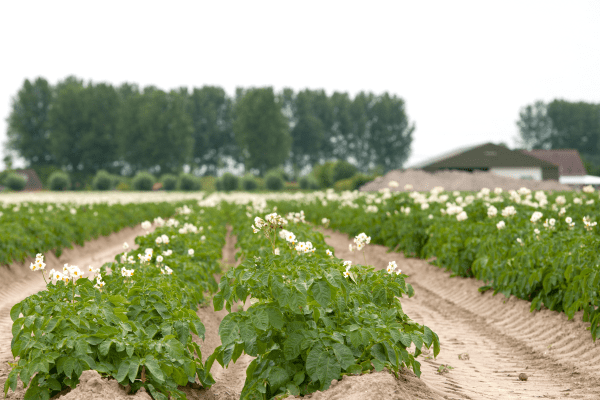
Fertilizer and specialty nutrition producer ICL has conducted a study to see how potato growers can maintain yields while reducing carbon footprint using controlled-release fertilizer (CRF) with the company’s biodegradable coating.
The pilot, over 31.12ha of potatoes at Flevoland and Zuid-Holland in the Netherlands revealed that producers could reduce their carbon footprint by 7.5% per tonne of crop by using ICL’s biodegradable CRF eqo.x, said the company. “Modelled to maintain yields with lower fertiliser usage, that reduction rises to 25.8%.”
The study was conducted across three potato farms, producing both table potatoes and processing varieties for French fries. The primary aim of the pilot was to obtain more experience in quantifying and certifying CO2 reduction within a farm setup.
“In total, the farms produced 1,832t of potatoes – averaging 58.87t/ha – and they emitted 24.76t of CO2e – two tonnes less than the baseline. Of this, 44% related to production of the fertiliser, 34% to direct emissions, 20% to leaching and 2% to volatilisation.”
The company says that further evaluation of the figures shows a 1.7% reduction in production emissions, a 12.6% drop in direct emissions, a 6.9% fall in leaching and a 35.4% lowering of volatilisation.
“We were looking at how a higher nutrient use efficiency (NUE) could be achieved without affecting yields,” explains Levi Bin, account manager at the Dutch farmer co-operative Agrifirm. “If you look at the carbon footprint of growing potatoes, about 40-50% is related to fertiliser – especially nitrogen fertiliser.”
CRFs are type of fertilizer that are coated and release their nutrients in a controlled way, matching the uptake by the plant. For this trial, it was a nitrogen CFR. The coating technology reduces losses through leaching or volatilisation and thus improves NUE. This enables farmers to use less fertilizer, which in turn lowers the in-field emissions. “It’s a twofold benefit.” In addition, eqo.x is the first CRF to obtain EU-recognised biodegradability certification ahead of mandatory standards set to be introduced in October 2028.
“This certification a statement of where the industry is headed,” says Ronald Clemens, global portfolio manager CRF at ICL. “We are giving growers a proven, compliant, and future-ready solution that combines agronomic excellence with environmental progress.”
ICL is now looking for partners to scale the initiative up, to 1000s of hectares globally, and is convinced the technology will be hugely important, says Georg Lemperg, global sustainability partnerships manager at ICL Growing Solutions.
“There aren’t many easy ways you can have a significant impact on the carbon footprint of various foods, from potatoes, onions and sugar beet to rice, coffee and palm oil. This is a really effective tool that achieves significant carbon reductions through improved NUE, while also making life easier for the farmer.”
For more information, visit the ICL website here.








 Facebook
 Twitter
 Instagram
 LinkedIn
 YouTube