



By Leonardo Gottems
Brazilian researchers are advancing a new technological route for phosphate fertilization based on struvite, a slow-release mineral fertilizer recovered from swine manure, in a development that could significantly reduce the country’s dependence on imported phosphorus inputs while strengthening circular agriculture practices.
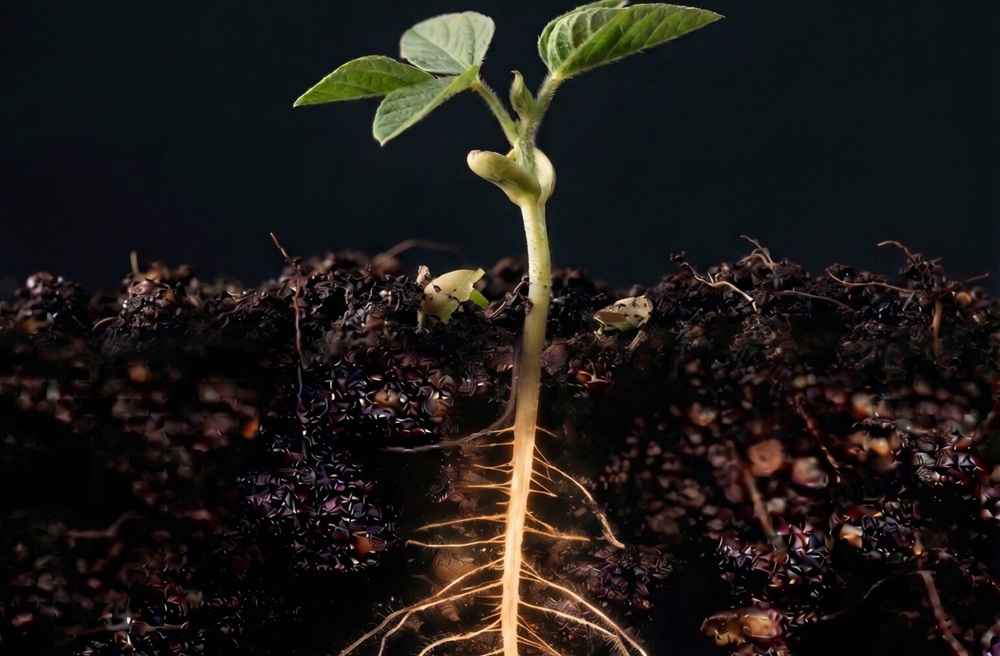
Scientists from Embrapa Agrobiologia (Brazilian Agricultural Research Corporation) reported that field trials with soybean crops demonstrated that struvite was capable of supplying up to 50% of phosphorus demand while maintaining yields at approximately 3,500 kg/ha — closely aligned with Brazil’s 2025 national soybean average of 3,560 kg/ha under conventional fertilization systems.

The findings come at a strategic moment for Brazilian agriculture. The country currently depends on imports for roughly 75% of its phosphate fertilizer demand, exposing growers to international price volatility and geopolitical supply risks.
According to Caio de Teves Inácio, researcher at Embrapa Agrobiologia and coordinator of the study, the initiative goes beyond simply replacing conventional fertilizers. “We are creating a new technological pathway for Brazilian agriculture, aligned with sustainability, autonomy, and innovation,” he said.
Turning Livestock Waste into High-Value Fertilizer
Struvite — chemically known as magnesium ammonium phosphate — is produced through the chemical precipitation of nutrients recovered from swine effluents. The mineral contains approximately 12% phosphorus, 5% nitrogen, and 10% magnesium.
Its agronomic relevance lies in its low solubility and gradual nutrient release profile, characteristics that are particularly advantageous in tropical soils. In Brazil’s highly weathered soils, phosphorus from conventional soluble fertilizers is rapidly fixed by iron and aluminum oxides, reducing nutrient availability and fertilizer efficiency.
Researchers found that struvite’s slow-release behavior and alkaline reaction improved phosphorus recovery efficiency in the soil, enhancing nutrient utilization compared to conventional phosphate sources.
The technology also directly addresses one of the livestock sector’s major environmental challenges: nutrient overload from animal waste disposal. By recovering phosphorus and nitrogen before manure application, struvite production reduces contamination risks to surface and groundwater systems while helping intensive swine operations comply with environmental regulations.
Potential Scale: 340,000 Tonnes Annually
According to estimates from Embrapa, large-scale adoption of the technology on farms with more than 5,000 pigs could generate approximately 340,000 metric tons of struvite annually in Brazil.
That production potential positions struvite not only as an agronomic tool, but also as a possible industrial platform within Brazil’s expanding biological and specialty fertilizer markets.
The researchers emphasize that the technology creates a new revenue stream for livestock producers by converting agricultural waste into a marketable input. The approach fits squarely within circular economy principles increasingly promoted across global agriculture.
Organomineral Fertilizers Gain Momentum
Beyond pure struvite applications, Embrapa scientists are also developing organomineral formulations that combine mineral nutrients with organic matter. Early diffusion experiments showed phosphorus mobility in soil was 50% higher during the first 28 days compared to conventional granulated struvite alone.
The research suggests that struvite may be applied either independently or combined with soluble fertilizers at rates ranging from 50% to 100% of agronomic phosphorus recommendations, depending on crop and soil conditions.
Such hybrid approaches reflect broader industry trends toward multifunctional fertilizer systems that integrate mineral nutrition, biological efficiency, and soil health management.
Globally, struvite recovery has gained considerable momentum over the last decade. More than 80 production facilities were already operating worldwide by 2019, particularly in regions facing nutrient surpluses from intensive livestock production or urban wastewater systems.
Countries including China, United States, and Germany currently lead research and commercialization efforts. However, despite Brazil’s major livestock sector and strong agricultural base, scientific understanding of struvite performance under tropical soil conditions remains limited.
“It is a paradox,” Inácio noted. “We have a promising resource, but little is known about its behavior under our acidic soils with high phosphorus adsorption capacity.”
Alignment with National Fertilizer Strategy
The project aligns with the objectives of Brazil’s National Fertilizer Plan, which seeks to expand domestic fertilizer production and encourage more sustainable nutrient technologies.
The initiative also reflects increasing convergence between waste recovery, specialty fertilizers, and biological efficiency technologies — one of the strongest innovation trends currently shaping the global plant nutrition industry. In addition to Embrapa, the project involves another institutes and universities.












 Facebook
 Twitter
 Instagram
 LinkedIn
 YouTube