

Danish biotech company Agrobiomics has developed an ultra-low dose biostimulant product that enables growers to combat salinity in soils. The company has achieved its first commercial-scale production and has run extensive trials for drought and saline stress on key crops, such as soybean, rice and tomato. The company’s first two products are targeted for launch in 2027.
Let’s talk briefly about the problem first – salinity in the world’s soils. What challenge does this present to growers?
Salinity is a chronic and rapidly intensifying threat to global food production, widely recognized as one of the most complex abiotic stressors to solve. According to the Global Status of Salt-Affected Soils report (FAO, 2024), nearly 1.4 billion hectares of land worldwide are already affected by salinity, which represents 10.7% of the total land area. An additional 1 billion hectares are at risk due to rising temperatures, increasing aridity, unsustainable irrigation practices, unwanted salt accumulation from low quality fertilizers, and accelerated land degradation.
Given the current economic and geopolitical context, fertilizers prices continue to rise and, as farmers seek to manage production costs, many are tempted to buy lower-priced, lower-quality fertilizers. While these products may contain the same amount of NPK, they often potentially carry higher levels of unwanted salts, fueling a vicious cycle that worsens salinity, increasing its impact on agriculture.
Climate models project that, under current warming trajectories, 24–32% of total land surface could become arid or semi-arid in the coming decades, with salinization expanding faster across developing countries. The economic impact of salt-induced degradation in irrigated areas alone is estimated to generate €25 billion in annual losses, not accounting for reduction in crop quality or efficiency losses associated with other inputs.
For farmers, this is not an abstract environmental concern—but is often underdiagnosed. In crops, salinity directly and progressively limits production: it reduces plants’ ability to take up water, disrupts nutrient balance, and limits fundamental physiological processes. In practice, this means lower yield and quality, reduced input efficiency, declining soil health, higher production costs, and long-term impact on land productivity.
The issue is already significant and, without decisive innovation, is expected to intensify in the years ahead.
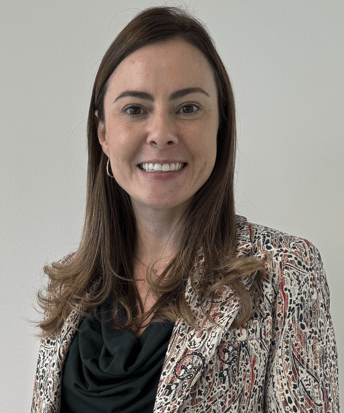
According to Ananda Scherner, CEO, this is precisely where Agrobiomics steps in. “Salinity doesn’t always look like salinity in the field. Because it can mimic symptoms of other stressors—like soil or root disease, nutrient deficiencies, drought, or others—it’s often misunderstood and underestimated. Our job is to help farmers recognize it and provide solutions that empower plants to overcome this stress. To do that, we are developing biomolecules capable of mitigating the effects of salinity, helping crops secure productivity where conventional solutions fall short,” said Ananda.
Agrobiomics’ technology activates precise physiological and metabolic pathways that help crops sustain growth and make better use of resources, even under unfavourable conditions.
Agrobiomics has a solution. It’s a biostimulant based on biomolecules derived from a microbe. Can you give a whistle-stop tour of the research story behind this biostimulant?
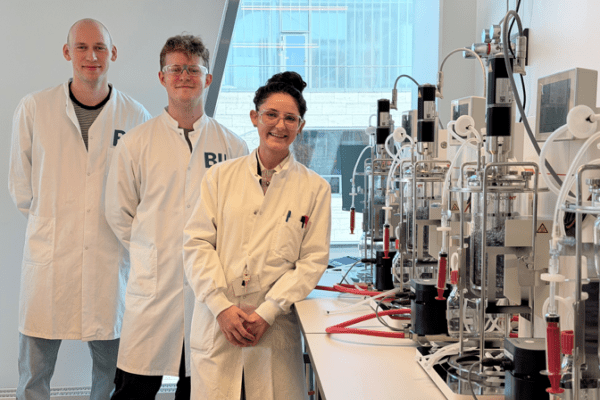
Our story begins at the Technical University of Denmark (DTU), where Professor Ling Ding identified remarkable ultra-low dose biomolecules produced by a soil-born bacteria. Initial research focused on exploring the potential of these biomolecules, starting with small-scale tests in a modest lab setup to confirm their biological activity. Those early results were already compelling to create Agrobiomics in 2022.
After the foundation, the next step was clear: transitioning from an academic discovery to structured, scalable R&D platform capable of supporting commercial development. This required building a robust scientific framework, establishing repeatable methodologies, and creating a pipeline that could transform promising biomolecules into a reliable technology.
“Scalability of our technology is the fundamental pillar of our R&D team. The science behind our biomolecules is grounded in technical knowledge and a precise understanding of the technology. We follow a structured R&D process with sequential and parallel activities that continuously feed the system. The goal is to deliver reliable information on our solutions and spark the next questions we need to answer,” shared Nicolas Schmitt, Global Technical Manager.
To bring innovation to a crowded market as the biostimulants, scientific rigor is essential. Building a product that can deliver consistent, repeatable, and mode-of-action-backed biological effects across crops and regions is non-negotiable. Equally important are stability, cost-effectiveness, compatibility with other agricultural inputs, and ease of integration into existing crop management systems.
According to Nicolas, “this combination of strong discovery roots, structured R&D, and a commitment to reproducible science is what enables Agrobiomics to bring differentiated biostimulants to the market, designed not just as inputs, but as strategic tools for resilient agriculture.”
What approach is Agrobiomics taking to guarantee scalable and reliable production capacity as you advance toward commercialization?
“You’ll notice we use the word scalable a lot, and that’s intentional. It reflects how developing a scalable solution is a core priority since day one, ” said Ananda.
Agrobiomics’ production is built on industrial biotech standards designed to guarantee reliability and cost-efficiency from the very beginning. Our manufacturing process combines several pillars, including precision fermentation that ensures batch-to-batch consistency; a robust downstream process that delivers stable active ingredients compatible with multiple formulations; and continuous process improvements aiming at reducing production costs while maintaining first-class quality parameters as we move toward commercial volumes.
“I’m proud to share that in 2025 we successfully moved from lab-scale production to 400L,” Ananda notes. “And we started 2026 with our first commercial-scale production run—an important milestone for the company.”
With these advances, Agrobiomics has already reached commercial manufacturing scale, making us capable of supplying both our own formulations and supporting B2B partners integrating our biomolecules into their product portfolios.
Pull-out quote: “We started 2026 with our first commercial-scale production run—an important milestone for the company.” Ananda Scherner, CEO, Agrobiomics
Your website talks about ‘unprecedented low application rates’ – how is this achieved?
Agrobiomics’ technology is based on high-potency biomolecules. In our case, the combination of precise single molecules with the science and engineering behind our manufacturing process enables ultra-low application rates, comparable to the efficiency of some chemical inputs, while being entirely derived from nature.
“We often say that one teaspoon of our active ingredient can treat at least 700 football fields. And this alone illustrates the magnitude of our ultra-low dose technology,” says Ana Carolina L. Morotti, Business Developer & Marketing Manager.
Such unprecedented application profile puts Agrobiomics in a distinctly advantageous economic position from the start. By delivering high efficacy at micro-doses, Agrobiomics’ solution becomes cost-effective, supporting broader adoption of biostimulants—including in highly cost-sensitive segments like row crops. “It removes one of the historical barriers to increase adoption in row crops and underscores why precision biostimulants represent the next leap in resilient agriculture”, adds Ana Carolina.
What is the planned timescale to a commercial market entry for Agrobiomics biomolecules?
Agrobiomics is currently in the advanced field validation phase across multiple geographies. Our first two product concepts are targeting commercial launch in 2027: soybean for drought tolerance in Brazil and tomato for salinity tolerance in Europe.
These will represent our first commercial wave, built on strong field data, regulatory readiness, and growing partner engagement.
“While 2027 marks the initial market entry, we are simultaneously expanding our field trials across additional crops and regions, especially in row crops, where the need for resilient agriculture tools is particularly urgent,” said Ananda. This broader validation effort is designed to accelerate subsequent concept launches, strengthen our scientific foundation, and support long-term business growth.
What are the target crops for this product? We understand the company has achieved some good results with rice.
Agrobiomics is focusing on crops where abiotic stress remains one of the biggest constraints on farmer profitability and long-term resilience. Our current field programs include soybean, tomato, corn, rice and cereals. For each crop, we target the specific stressors that create the largest pain points for farmers.
For example, in soybean, we are evaluating drought tolerance in regions affected by water scarcity, such as Southern Brazil, the United States. In tomato, we are investigating salinity adaptation in the Mediterranean region, where irrigation with saline water is common. In rice, our focus is salinity, particularly across Asia, where salinization is expanding rapidly and threatening yield potential.
Beyond abiotic stress conditions, we are also evaluating our product performance in the absence of stress. “One of the challenges in the biostimulants market is to prove to farmers what they can expect when no abiotic stress occurs, so they can extract the maximum value from the input they apply,” say Nicolas. “In this sense, our research shows positive benefits of using our technology even when stressor is not pronounced or present.”
Rice indeed has delivered interesting results: under salinity conditions, our trials have shown yield increases ranging from more than 7% up to 30%, depending on the severity of the stress. As Nicolas explains: “We are now working with CROs in Asia to run another trial season to validate the results achieved in the last two years, which will further support our product positioning, benefits, and claims.”
The versatility of Agrobiomics’ biomolecules allows them to be tested across multiple crops and environments. Still, our commercial priorities remain grounded in three guiding principles: the specific problem we are solving at the farmer level, the urgency and scale of the stressor, and the size and timing of the market opportunity.
This strategic focus ensures that we deploy our technology where it can deliver the greatest agronomic impact and commercial value for farmers, partners, and the company.
You’ve also been successful in fundraising – talk us through the most recent tranche and how this will drive the business.
Our fundraising strategy combines equity investments—from Noon Ventures and Bio Innovation Institute, who share our mission of pioneering resilient agriculture—with soft-funding from programs such as GUDP and the EIC-Accelerator. These sources serve as strong external validation of our scientific foundation and commercialization potential, while playing an essential role in accelerating product development and advancing our technology toward market readiness.
The capital is being used across four critical pillars: product development, manufacturing scale-up, regulatory readiness, and team expansion, adding scientific, business development, and operational talent to support the next phase of growth.
“This combined investment strengthens our ability to move quickly and confidently toward commercialization, while maintaining the scientific rigor and precision that define Agrobiomics”, shared Ananda.
And lastly, although the company’s efforts are mainly focused on getting the final product to market, what other plans does Agrobiomics have for these biomolecules?
While our primary focus is on preparing for commercial launch, our technology opens multiple strategic opportunities that will allow us to build a strong and diversified portfolio. Our platform enables us to explore different combinations of crops x abiotic stress x countries x method of application, expanding the reach and versatility of our biomolecules.
Looking ahead, we plan to develop new concepts for additional crops and geographies, explore integration into partners’ formulations to boost performance, and advance research on multi-stress environments.
As Ananda explains: “When developing a new solution, research usually focuses on one abiotic stress at a time but crops rarely experience single stress. Drought often comes with heat, and salinity can also overlap with it. These combined stressors can significantly amplify crop damage, and we want to understand how our solution performs under combined stresses.”
For Agrobiomics, the biomolecules are not just a product, they are a platform. They work well as a stand-alone solution, but they can also be integrated into existing commercial products to enhance efficacy and create differentiation. “This flexibility strengthens our ability to support partners, deliver value to farmers, and broaden the role of precision biostimulants in agriculture,” concludes Ananda.
This interview appeared in the March/April 2026 issue of New AG International where the theme was Salinity – read full issue, no login required: here.










 Facebook
 Twitter
 Instagram
 LinkedIn
 YouTube