Rovensa Next seeks to Biosolutionize Agriculture – In conversation with Javier Calleja, CEO, Rovensa Group.
December 17, 2025
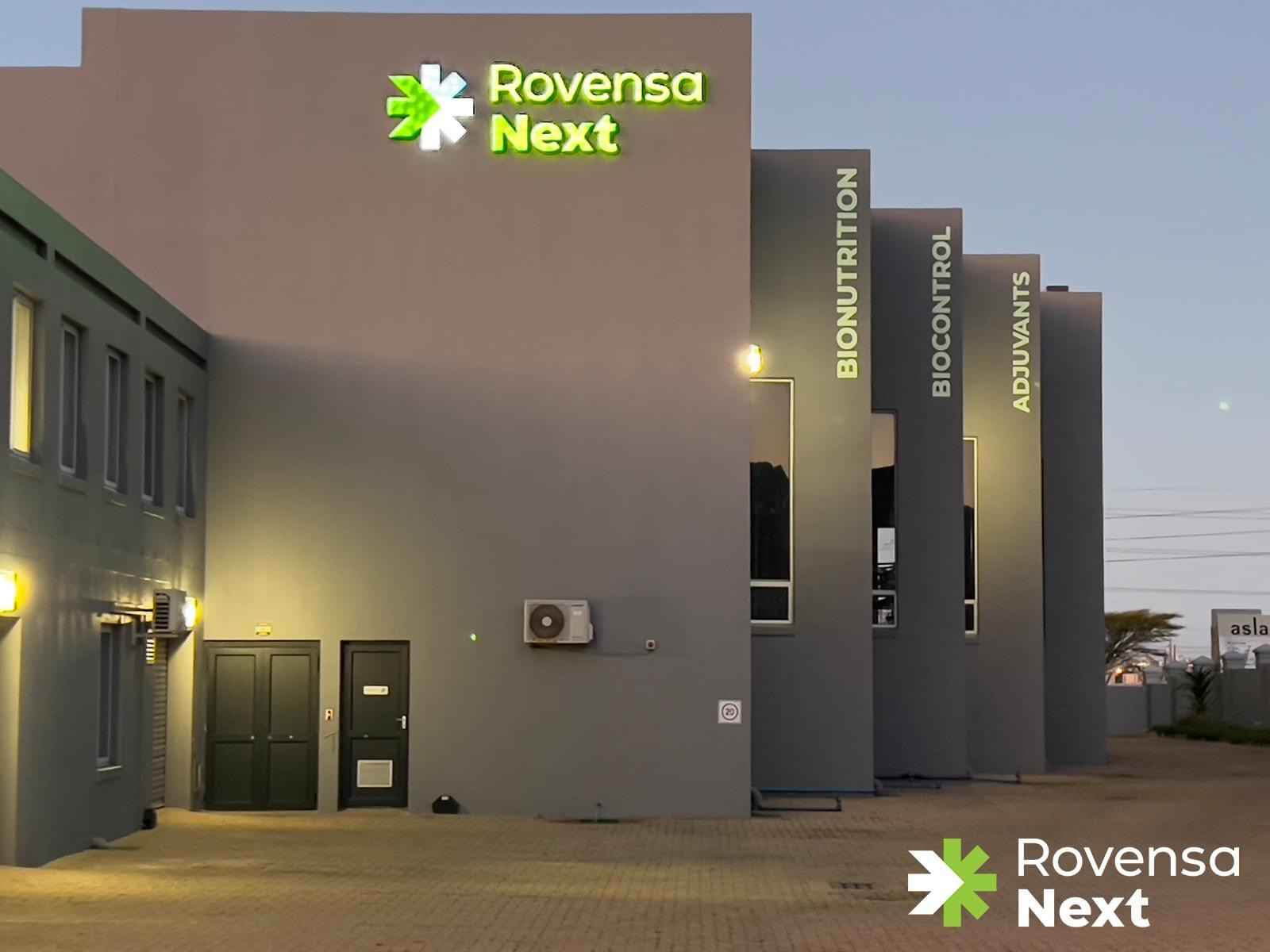
Rovensa Next Production Plant in Strand, South Africa
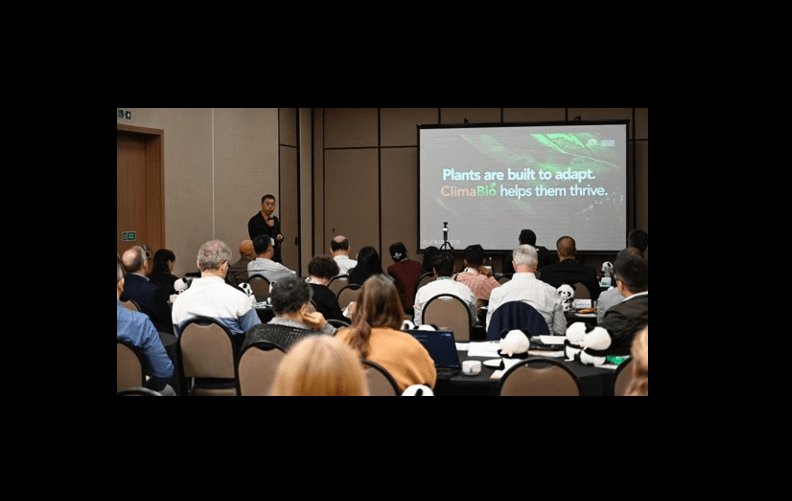
At the 8th Biostimulants World Congress in Barcelona, José Nolasco, Head of Global R&D Bionutrition at Rovensa Next, gave a presentation where he explained the concept of Biosolutionize. Before the Congress, New AG International put the questions to Rovensa Group CEO Javier Calleja.
Rovensa Next has launched “Biosolutionize Agriculture” as a global campaign. What drove the decision to launch this science-backed campaign now, and how does it align with the current challenges facing agriculture professionals worldwide?
“Our team of experts in the field works hand in hand with growers around the world, listening to their day-to-day problems. These growers don’t need promises; they need solutions that bring tangible results in the field. Therefore, as a global biosolutions leader, we can’t just follow a trend, we must act and lead the transformation in agriculture, and Biosolutionize Agriculture fulfils this promise. It is our global call to action to tackle current real-world pressures through integrated crop strategies. We are not just talking about products. We develop biosolutions as a comprehensive way to resolve problems by combining biological and natural-based products, innovative technologies and integrated farming practices. Biosolutions address multiple challenges all at once. They have been designed as holistic programs, not one-off fixes. They are tailored by crop stage and local conditions. Their efficacy has been proven and scientifically validated through trials and research-performance that growers trust. This is not a question of marketing. We have over 65 years of experience, R&D expertise, innovative technologies and data from hundreds of trials, which show how biosolutions help growers improve performance and profitability, reduce synthetic inputs and farm more sustainably across crops and climates worldwide. What sets Rovensa Next apart is the broadest portfolio in the industry, spanning biostimulants, biofertilizers, bionutrition, biocontrol products, and adjuvants. It delivers bespoke crop programs combined with local expertise in over ninety countries, effectively blending global reach with local insights. Each crop strategy helps growers mitigate abiotic stress, improve soil health and vitality, enhance water-use efficiency, boost crop quality and resilience, optimize agricultural inputs, preserve beneficial insect populations, effectively manage pests and diseases, and support resistance management.
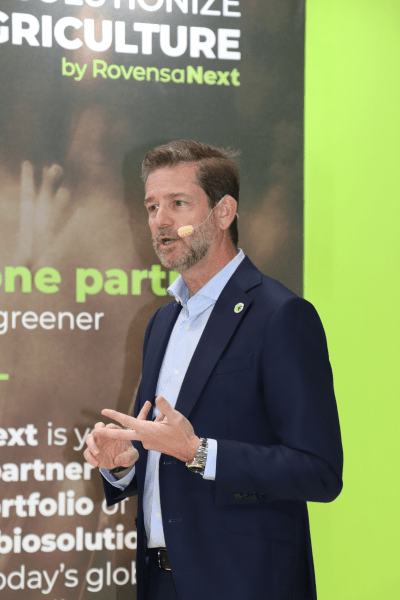
Javier Calleja, CEO Rovensa Group
When launching the campaign, Rovensa Next said “growers don’t need promises; they need solutions that deliver tangible results in the field.” Can you elaborate on the most compelling data from Rovensa Next’s extensive library of trials that demonstrate how biosolutions are delivering measurable gains in both farm profitability and sustainability?
When it comes to demonstrating measurable gains in both profitability and sustainability, we certainly have clear evidence from our global and local trials. Growers need solutions that produce tangible results, and our global trials confirm that integrated biosolution programs do just that. Let me give you two examples from the berry sector, which is one of the fastest-growing crop categories worldwide. Berries are not only a healthy, antioxidant-rich option for consumers – they also represent a highly profitable crop for growers across many markets. In strawberries, our integrated biosolution programs consistently deliver higher yields. Across 30 global trials conducted under diverse local conditions, we have demonstrated an average yield increase of 9.1%, which represents more than €2,000 per hectare in additional profit for growers. Similarly, in blueberries, an integrated biosolution strategy combining Biimore and Vegenergy (both biostimulants) with Wet-Cit (an adjuvant) resulted in a 15.4% yield increase.
Taking another angle, this time reducing active ingredient loading: our biocontrol product that will be launched soon, Orofusion, which is a formulated combination of sulfur and our proprietary orange oil know-how, enables a 44% reduction in elemental sulfur application while maintaining the same level of control against Apple Scab. This is particularly relevant given ongoing discussions in several countries about reducing the maximum seasonal application rate of sulfur. No matter the local challenge, our tailored biosolution packages are designed to address it effectively. Beyond boosting yield, this biosolutions approach also supports soil health, improves nutrient use efficiency, and enhances crop resilience. We can meet real-world needs such as reducing active ingredient load per hectare while simultaneously lowering the risk of pest and disease resistance. Overall, it is clear that integrated biosolutions, when correctly implemented at the local level, are powerful, and in the case of Rovensa Next, data driven tools, for improving both performance and sustainability.
Beyond showcasing the science-backed results, what specific actions and initiatives will form the core of the “Biosolutionize Agriculture” campaign? How will Rovensa Next actively engage with growers across your 90+ countries to demonstrate these biosolution strategies? Biosolutionize Agriculture is grounded in real-world demonstrations, comprehensive field research, and the support of technical experts who guide growers through proven biosolution strategies. More than an awareness or education effort, the campaign is a global activation plan designed to transform agricultural practices at scale.
To bring this mission into practice, local field demonstrations are conducted worldwide. Hundreds of in-field trials across diverse crops and climates illustrate how biosolutions improve yield, reduce synthetic inputs, and enhance both soil and plant health. Its impact is reinforced by sustainability metrics, with quantifiable indicators such as reduced chemical inputs, improved soil health, healthier natural ecosystems, a lower carbon footprint, and decreased water usage—fully aligned with global ESG goals. Growers also benefit from local agronomic support in 90 countries. Rovensa Next’s network of more than 850 field experts and agronomists provides hands-on guidance tailored to regional crops, climates, and regulatory realities. Knowledge is further shared through in-field meetings and workshops, including grower visits, events, and technical seminars, all focused on practical crop strategies that build capacity and trust through direct experience. The initiative is visible across major agricultural gatherings. It has been highlighted at global events such as Fruit Attraction 2025, ABIM, and the Biostimulant World Congress, as well as regional forums including Ficafé in Brazil, Expo Agro Alimentaria in Mexico, Siflor in Ecuador, Sival in France, and CAC in Asia, enabling Rovensa Next to connect with growers, policymakers, and researchers to scale adoption. Ultimately, Biosolutionize Agriculture is more than a campaign—it is a movement. It empowers farmers with the tools, knowledge, and confidence to transition toward more resilient, profitable, and sustainable farming systems.
Talking with your team, one key message is that biosolutions are rarely used in isolation, and go beyond just products. Can you expand how agriculture professionals can implement your comprehensive approach that combines biological products, innovative technologies, and sustainable farming practices on their operations?
Biosolutions are most effective when integrated into a comprehensive, and well thought out, program combining biological and natural-based products, biostimulants, crop nutrition, biocontrol, biofertilizers, and adjuvants, with innovative formulation technologies and sustainable practices, often in conjunction with traditional practices and chemistry. Across extensive global trials, our integrated biosolution programmes consistently deliver significant yield improvements, an average yield increase of around 8 – 10%, often with peaks of 20% or more in fruit and vegetable crops. Our advanced formulation technologies, including controlled-release systems and synergistic combinations of biostimulants and nutrients, alongside biocontrol products such as biofungicides and bionematicides, and of course not forgetting relevant adjuvants such as soil penetrant enhancers have improved soil health and vitality and nutrient-use efficiency. Thinking about sustainable use of water, as well as a direct cost saving to growers, we have demonstrated that we can reduce irrigation needs by more than 18%, maintaining yield and quality while not increasing crop susceptibility to abiotic stress. These various approaches allow farmers to reduce inputs, regenerate their soils, and maintain high productivity, demonstrating that performance, sustainability and profitability can thrive together.
The campaign highlights achieving up to 20% reductions in synthetic inputs while maintaining or improving yield and quality. For agriculture professionals concerned about transitioning away from conventional methods, what guidance does Rovensa Next provide to ensure this transition doesn’t compromise their operational performance?
Rovensa Next recognizes that transitioning from conventional agriculture to biosolutions can be a significant shift, but we must remember that many growers have already started the journey driven by climate, regulatory or economic needs. We aim to build on these drivers in a comprehensive and integrated fashion and our showcases of potential reductions of up to 20% in synthetic inputs without sacrificing yield or quality for example, are a beacon that can lead the market and demonstrate what is truly possible. Instead, we recommend a phased, evidence-based approach. Our local field teams, equipped with a combination of decades worth of hands-on experience, provide tailored guidance to help growers start with small biosolutions packages. These are typically recommended as “mini-packages” that target specific crop stages or challenges. Their design focuses on delivering measurable benefits, such as improved stress tolerance, enhanced fruit quality, and better pest and disease control resilience, all without disrupting existing systems. Then as knowledge builds and distributor and grower confidence and expertise increases these “mini-packages” are layered and combined to create total integrated biosolutions strategies covering from the pre-establishment phase through to the post harvest of the crop. This stepwise strategy, backed by local knowledge and trial data, builds the understanding necessary for broader adoption over time. This is why we have a team of over 850 technical experts worldwide — we are your all-in-one partner, ensuring that you receive advice tailored to your local conditions, crops, and regulations. This partnership and support are crucial for building confidence in biosolutions. In summary, Rovensa Next’s guidance is practical and rooted in science: start small, build on results, and scale as you gain experience, ensuring that performance and profitability is either maintained or improved while advancing sustainability.
Rovensa Next has recently appointed Victor Sonzogno as its new Head of Brazil. Although Rovensa Next has been active in Brazil for some years, does this signal a new focus on this market?
This is not a new focus. Rovensa Next has over 40 years of experience in Brazil developing, manufacturing, and distributing biological agricultural solutions. It has a strong position in the microbial segment and a specialized portfolio that includes microbial inoculants and other biological products. Our operations in Brazil are supported by a substantial team and two advanced production plants. The Campinas facility focuses on bionutrition, biofertilizers, and biostimulants, particularly microorganism-based products. It also houses an Excellence Center for Biological and Microorganism Product Design along with a pilot plant dedicated to formulation development. The Arapongas plant specializes in biocontrol solutions and orange-oil-based adjuvants. Together, this solid local infrastructure and our committed R&D teams underscore Rovensa Next’s strong emphasis on innovation and large-scale deployment within Brazilian agriculture. The strategic appointment of Victor Sonzogno as the new Head of Brazil underscores Rovensa Next’s commitment to strengthening its market position and accelerating its ambitious growth agenda in the region. Looking ahead, our Brazilian strategy is centered on fully leveraging the extensive portfolio acquired through multiple group acquisitions, strengthening relationships with our large client base, enhancing B2B partnerships, and expanding our footprint even further in row crops.
Rovensa Next research centre in Brazil
With over 65 years of experience in the industry, how do you envision the “Biosolutionize Agriculture” campaign contributing to the transition toward more resilient agriculture, and what role do you see biosolutions playing in the future of farming over the next decade?
Biosolutionize Agriculture is a global movement to drive resilient, sustainable farming. It educates and empowers growers with science-backed, holistic programs and knowledge tailored to individual crops and local conditions. We are already seeing measurable results. Over the next decade, biosolutions will play a central role in transforming agriculture by helping growers to adapt to climate challenges, meet regulatory demands, and maintain profitability through regenerative practices.
















 Facebook
 Twitter
 Instagram
 LinkedIn
 YouTube