


By Janet Kanters
Research inspired by fungus-growing ants is opening the door to a new way of helping crops cope with salty soils – by transferring beneficial bacteria from one plant generation to the next.
Ulrich Mueller, a professor of integrative biology at The University of Texas at Austin, has spent years studying how ants manage their fungal crops. That work has led to advances in microbiome breeding, a method that focuses on the bacteria living on plant roots.
“The agriculture of these insects is so much smarter because they’ve done it for 66 million years,” Mueller said. “Evolution figured out a lot of things that we’re just beginning to figure out.”

In recent research, Mueller and his team showed that selecting and transferring helpful microbes can improve plant tolerance to salt. In their trials, treated plants had 50 percent less sodium in their leaves, making them healthier and better able to handle stress.
The approach is based on a simple idea: take microbes from the roots of strong-performing plants and apply them to the seeds of the next generation.
“When a plant grows really well, I can infer that there are beneficial microbes associated with it that I should harvest and move from one plant to the next,” Mueller said. “The microbes are taken from a root and are moved onto the seeds of the next generation.”
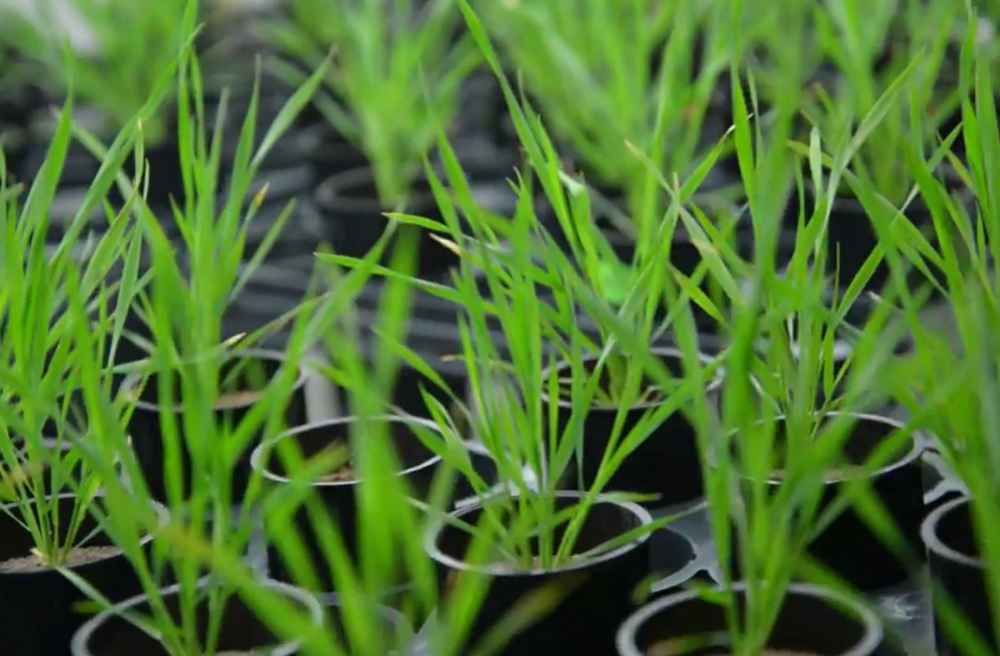
Mueller first began exploring the concept in 2010 using a small batch of grass seeds. Early work involved trial and error as he worked out how to run the experiments.
“For the first three years, I did about four or five experiments, and I learned mostly how not to do things,” he said. “I think that’s typical for science, when you try something new, and nobody’s worked out a technique.”
By 2015, Mueller had developed methods that are now used by researchers around the world.
The idea mirrors how leafcutter ants manage their own crops. When ants move their fungi to a new location, they carry along the microbes that help the fungi thrive.
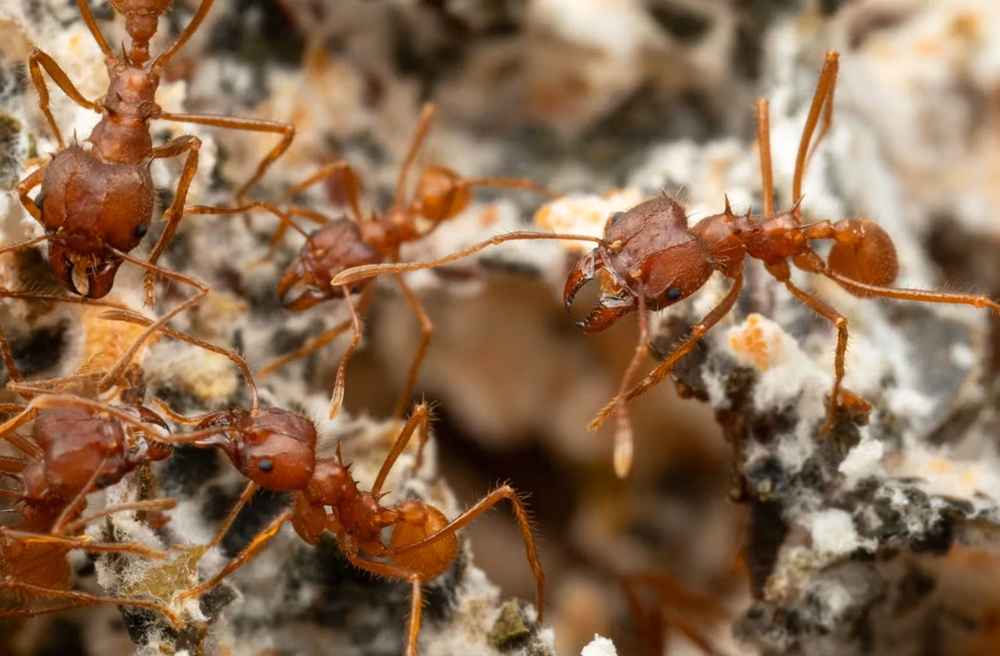
“The ants never leave anything behind that is associated with their crop,” Mueller said. “They probably don’t see and smell the microbes. They just look at how well the crop is growing, and that tells them indirectly that there’s beneficial microbial elements associated with that.”
Salt buildup in soil is an increasing concern for farmers, especially as irrigation use rises and climate conditions change. Over time, salts can accumulate and reduce plant growth.
While microbiome breeding is currently best suited to controlled environments, Mueller said it can help identify specific microbes that could be developed into practical tools for farmers. His team has already identified three microbes that may play a key role in improving salt tolerance.
“The next thing is to isolate those microbes and test those with plants and see whether a single microbe that you inoculate onto a plant can confer that tolerance,” Mueller said.
Interest in this area has grown quickly in recent years, with more researchers exploring how soil microbes affect plant performance. Mueller expects that work to continue expanding.
“Since 2015, when we published the first review paper, a lot of people have moved into this research area,” Mueller said. “It’s really great to see that out of nothing, this new research area came about.”










 Facebook
 Twitter
 Instagram
 LinkedIn
 YouTube