

By Janet Kanters
A groundbreaking study led by researchers at Pennsylvania State University (U.S.) has unveiled a low-cost sensor system capable of detecting salt stress in plants before visible damage occurs.

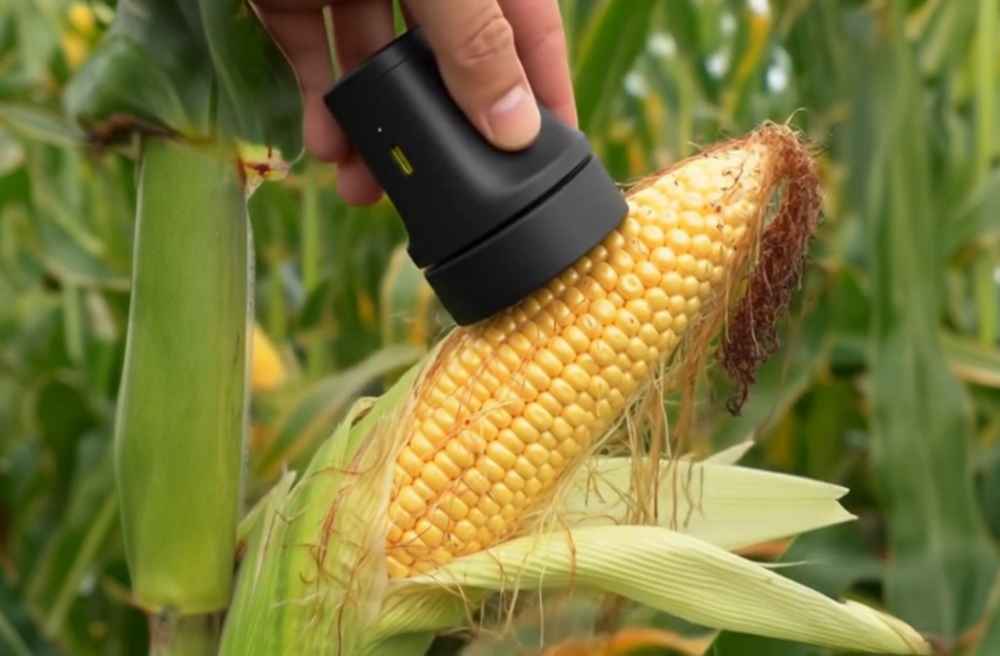
This innovative technology, described as an “electronic nose for crops,” could revolutionize precision agriculture by providing farmers with early warnings of soil salinity issues, a major challenge affecting crop yields worldwide.
“The low-cost sensor system we developed detects volatile organic compounds released by plants when stressed – think of it like an electronic nose for crops that ‘smells’ gases put off by plants in distress and can warn farmers of salt stress early,” explains Francesco Di Gioia, associate professor of vegetable crop science at Penn State.
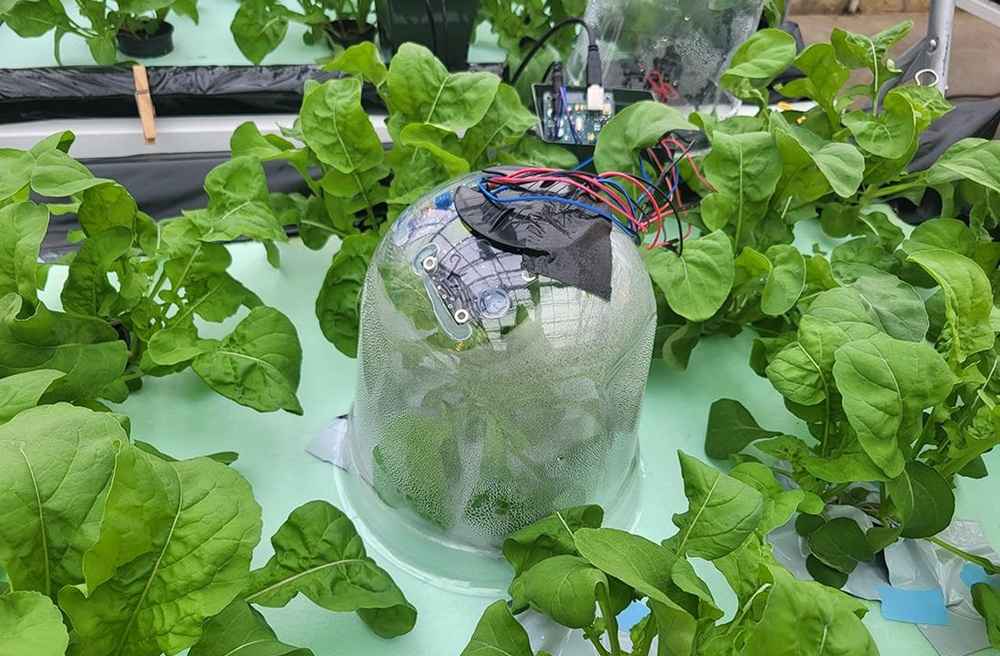
The study, published in the IEEE Sensors Journal, demonstrated that salt-stressed plants emit distinct volatile organic compounds (VOCs) detectable by inexpensive metal-oxide semiconductor sensors. These sensors, costing as little as US$1, were deployed in a controlled hydroponic greenhouse experiment using arugula plants. Researchers induced varying levels of salt stress by adding sodium chloride to the plants’ nutrient solutions, capturing the gases released under dome enclosures.

Ali Ahmad, the study’s first author and a doctoral student at the Polytechnic University of Valencia, Spain, emphasized the affordability and accessibility of the technology. “We studied metal-oxide semiconductor sensors because they are small and easy to deploy, widely available online and very cheap. That means farmers could potentially deploy many sensors across a field.”
The sensors achieved remarkable accuracy, with machine learning models trained to recognize VOC patterns achieving up to 99.15 percent accuracy in identifying plant stress levels. This early detection capability could help farmers mitigate salinity stress before it impacts crop growth and yields.
“Salinity stress is a major issue in many regions and coastal areas around the world, and most vegetable crops are highly susceptible to the accumulation of salts like sodium chloride, which hinder nutrient uptake and decrease productivity,” Di Gioia added.
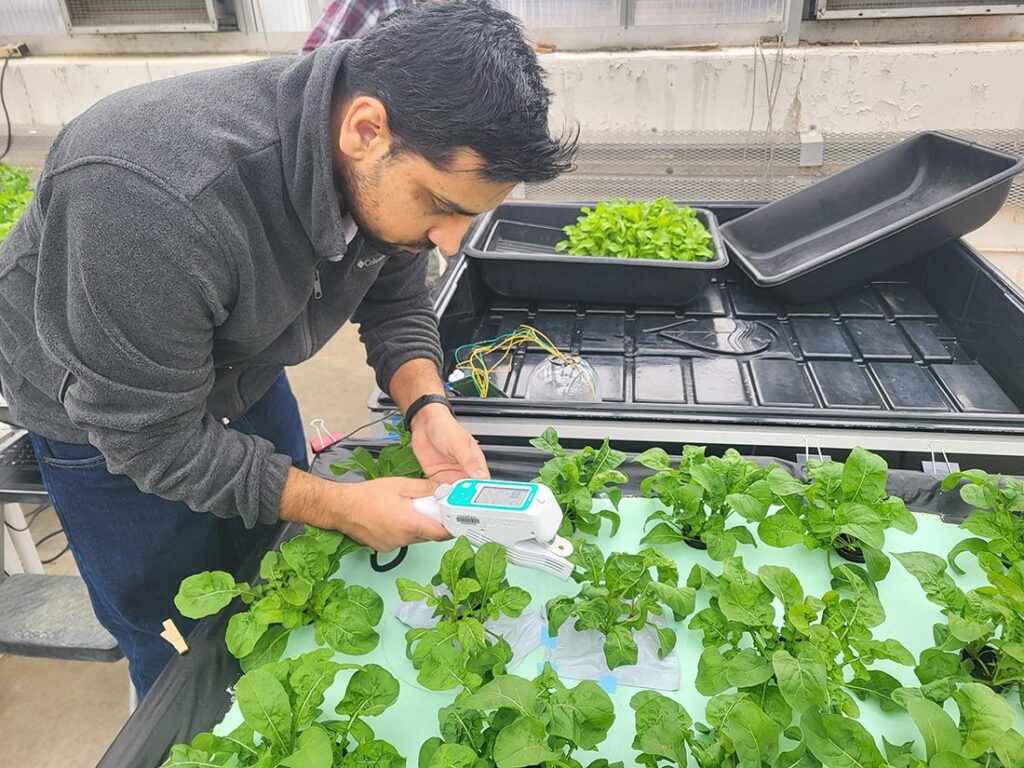
The research team also explored the broader potential of these sensors in precision agriculture. In related work published in Advanced Sensor Research, they found that the same inexpensive sensors could detect VOCs emitted by plants under other stress conditions, such as drought, disease, and pest infestations. This capability, combined with artificial intelligence, could pave the way for smarter farming practices that optimize resource use while improving crop health.
“Very inexpensive gas sensors combined with artificial intelligence point to a promising future for smart farming,” said Di Gioia. “But right now, the technology isn’t fully reliable and there are significant challenges involved in setting up affordable networks, so more research and better data are needed.”
The research was funded by the U.S. Department of Agriculture’s National Institute of Food and Agriculture and Spain’s Ministerio de Ciencia, Innovación y Universidades/Agencia Estatal de Investigación.
New AG International’s March-April 2026 issue takes a deep dive into the topic of salinity. Read for free here.









 Facebook
 Twitter
 Instagram
 LinkedIn
 YouTube