

by Leonardo Gottems
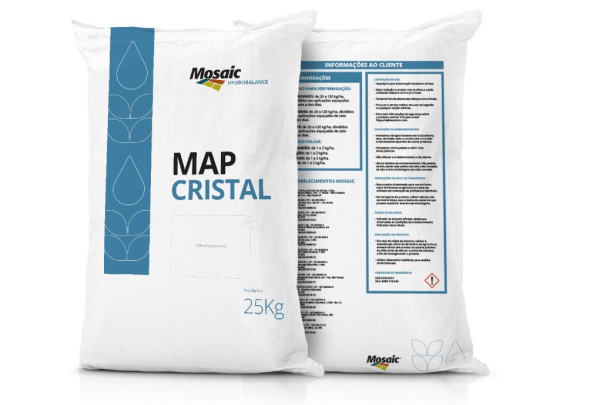
American fertiliser giant Mosaic, one of the world’s largest producers of plant nutrition products, has formally entered Brazil’s fast-growing fertigation market with the launch of its new HydroBalance line. The move underscores Mosaic’s strategic focus on innovation, efficiency, and sustainability, as it responds to the rapid evolution of Brazilian agriculture and the sector’s demand for precise nutrient application technologies.
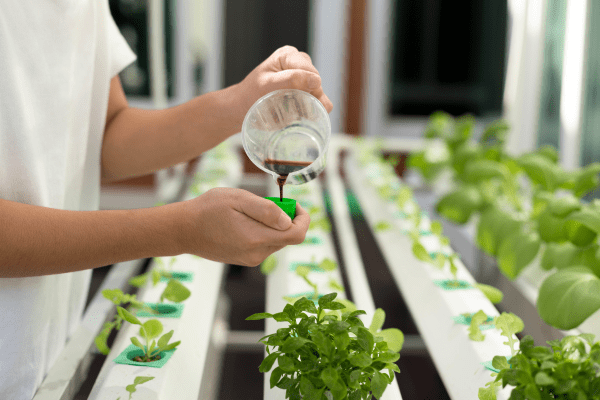
Fertigation — the process of applying soluble fertilisers through irrigation water — allows producers to deliver nutrients directly to the root zone, combining hydration and nutrition in a single operation. The technique enables more controlled and efficient use of fertilisers, improving crop performance while reducing resource waste.
Eduardo Monteiro, Mosaic’s Country Manager in Brazil, described the development to NewAG International as “a milestone in Mosaic’s journey”, signalling a new phase in its commitment to modern, high-efficiency farming.

“We are expanding our portfolio with solutions that address the current needs of the field, combining technology, efficiency, and respect for the environment,” said Monteiro. “This launch reinforces Mosaic’s role as a strategic partner to farmers, offering not just products but technical support and integrated solutions for more efficient, sustainable, and profitable agriculture.”
Strategic Launch
The HydroBalance line will be available nationwide from November through Mosaic’s network of cooperatives and distribution partners. The rollout will take place in stages: three products will be introduced by the end of 2025, followed by 12 in the first half of 2026 and a further 10 in the second half. The fertilisers will be offered in 25-kilogram packages, largely produced overseas, with plans to expand to Paraguay in the near future.
While fertigation has long been established in high-technology agriculture, Monteiro emphasised that Mosaic’s entry will bring new standards of reliability and quality to one of the sector’s most promising growth areas.
“The launch of our new fertigation-focused technologies broadens the possibilities for precise and efficient crop management,” he explained. “This move is aligned with what the entire industry is now discussing — the pursuit of productivity with responsibility.”
The HydroBalance formula combines mineral and biological fertilizers, developed under Mosaic Biosciences, the company’s innovation arm. Designed for use in fruit, vegetable, coffee, and citrus production systems, they deliver immediate nutrient availability with high solubility, contributing to improved yields and sustainable resource use.
Expanding Market Potential
Monteiro sees major growth ahead for Brazil’s fertigation segment. Current fertiliser use via irrigation totals about 1 million tonnes per year, but the potential could reach 4 million tonnes by 2030, driven by the steady expansion of irrigated acreage.
Only 10% of Brazil’s 90 million cultivated hectares are irrigated today, placing the country sixth globally — behind India, China, Turkmenistan, the United States, and Pakistan. Forecasts suggest that irrigated area could reach 20 million hectares by 2040, creating a vast market for precision solutions like HydroBalance.
“Brazilian agriculture is entering a phase where technology, efficiency, and sustainability are inseparable,” Monteiro noted. “This includes more advanced fertigation systems and consistent progress in bionutrition — both essential to improve nutrient use efficiency and raise productivity with reduced environmental impact.”
Competitive Strength
With Brazil accounting for 41% of Mosaic’s global revenue, equivalent to 24.15 billion Reais (US$4.7 billion) in 2024, the company’s investment in fertigation strengthens its regional leadership. Mosaic has also recorded a sharp rise in sales of biological solutions, which are expected to surpass US$70 million in 2025.
For Monteiro, these innovations are important at a time when farmers face high input costs: imported fertilisers make up more than 84% of the supply and nearly 40% of total soybean production expenses in the 2025/26 season.
“Technologies such as fertigation and biological inputs are essential to maximise productivity and reduce waste. They represent the future of agriculture — smarter, more efficient and environmentally responsible,” Monteiro concluded.
The move comes as Mosaic complete the sale of mineral mining assets in Brazil. Earlier this month, the company completed the previously announced transaction with VL Mineração for the sale of Mosaic Potássio Mineração Ltda., the entity that operates the Taquari-Vassouras potash mine located in Rosário do Catete, Sergipe, Brazil.
In October, the company completed the sale of its idled Patos de Minas phosphate mining unit to Fosfatados Centro.









 Facebook
 Twitter
 Instagram
 LinkedIn
 YouTube