

By Janet Kanters
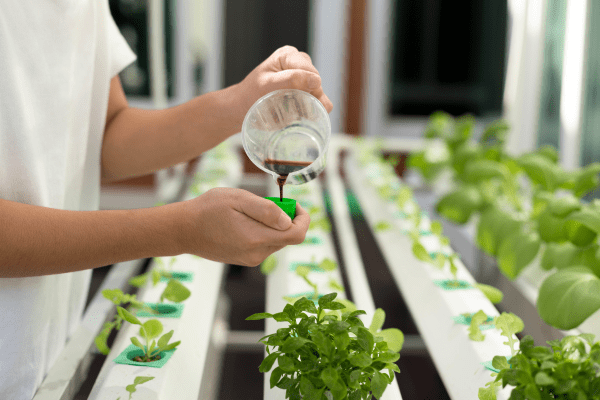
A Brock University (Ontario, Canada) research team is reporting early signs that a probiotic fermentation of molasses fortified with herbs could become a viable natural alternative to synthetic fertilizers in greenhouse crops – and potentially, down the road, in field agriculture.
The work is part of a collaboration between Brock chemists Dustin Duncan and Vaughn Mangal and Mississauga, Ontario-based Wandler Probiotics, facilitated through the Greenhouse Technology Network, and funded by the Government of Canada through the Federal Economic Development Agency for Southern Ontario (FedDev Ontario).
The project evaluated whether a proprietary probiotic-herb blend could improve crop performance while reducing reliance on conventional fertilizers.
“We wanted to see if their product could replace conventional synthetic fertilizers with a natural method of supplying nutrients to plants growing in greenhouse environments,” says Mangal, associate professor of chemistry.
How the technology works
Wandler Probiotics manufactures liquid formulations of live probiotic bacteria and then “fortifies” the fermentation with fresh plant material and herbs. The company describes the process as a “controlled activation” – a short, anaerobic fermentation that boosts microbial activity and unlocks plant-derived compounds.

Lars Wandler, CEO, says the four-step process is straightforward: “Dissolve organic molasses in warm water, fortify the fermentation with healthy organic spinach plants, inoculate the fermentation with LTP 8+6™, and ferment for 10-14 days in an anaerobic vessel while maintaining consistent temperature.”
According to Wandler, fermentation breaks down cellular structures within the herbs, releasing nutrients and metabolites that lactic acid bacteria convert into compounds plants can more readily absorb. “The fermentation process unlocks the active ingredients in the herbs, improving these ingredients’ bioavailability,” he says.
Early results: Taller plants, more leaves
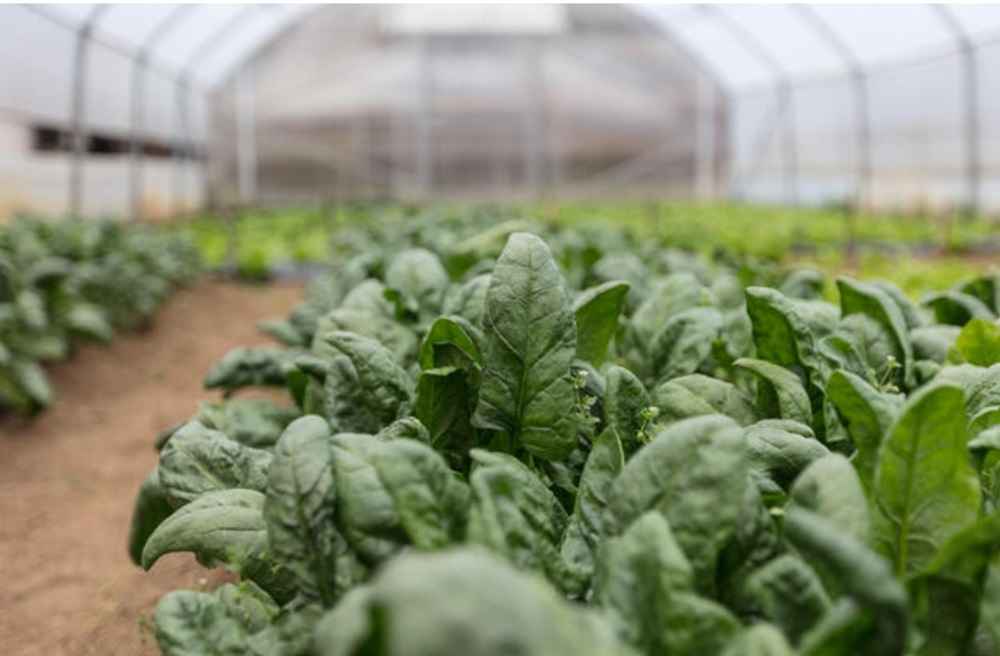
The Brock team tested the fortified probiotics on greenhouse spinach over the course of a year. Although the analysis is ongoing, initial observations are encouraging.
“Early results indicate spinach plants grown in the herb-infused soil had taller stalks, a greater number of leaves and a better shoot-to-root ratio than spinach grown in soil without the herbs,” Mangal says.
A stronger shoot-to-root ratio typically indicates more efficient nutrient uptake below the soil line and better photosynthetic capacity above it.
Duncan notes the scientific interest behind the partnership: “When Wandler Probiotics approached us, I was very interested in learning about the molecules in these mixtures that help the plant grow, since a lot of my background is in small molecule and microbial interactions.”

Greenhouse sector identified as first market
Wandler says the technology aligns closely with the needs of commercial greenhouse growers.
“We have chosen to focus on the greenhouse sector as it has been identified as a hotbed for growth and is expected to double its acreage over the next 10 years,” he says. Alongside spinach, the company is targeting tomatoes and peppers – two of Ontario’s most widely planted greenhouse crops.
The fermentation process is also designed with scalability in mind. “Using the process of controlled activation, the capacity not only increases 20x, but the cost also drops substantially per unit,” says Wandler. “As a result, fortified probiotic solutions can enhance not only the environmental but also the financial sustainability of the greenhouse sector.”
Regulatory landscape still evolving
While LTP 8+6 – the microbial base – is registered with the CFIA as a biostimulant and listed by OMRI Canada for organic use, the broader regulatory picture remains in flux.
“Right now the technology is generally sold as a soil amendment,” Wandler says. “The regulatory hasn’t completely caught up to this type of technology and hence the reason why it sits in these generic buckets.”
Compatibility and practical use
Compatibility issues appear limited. Wandler notes that the main caution is with non-selective herbicides: “The applications of non-selective herbicides and fortified probiotic inoculant should be separated by seven days.” Most other biological or chemical inputs can be used alongside it.
Growers exploring adoption, he says, will want clear performance data: “To understand the potential of fortified microbial supplements, growers will want successful case studies documenting the added value fortification has to offer.”
Next steps: More crops, more environments
The current study focused on greenhouse spinach, but both the company and researchers say expansion is already underway.

Mangal sees potential in scaling beyond controlled environments: “Given that we’ve already seen some success in greenhouse conditions, it’s not to say that we couldn’t do it in large-acre applications. Now that we’ve seen that it works, we’ve been thinking about other ways that we can test the versatility of the product – whether it’s additional crops or conventional versus greenhouse farming.”
Duncan adds that the collaboration has also provided training opportunities for students: “It’s been really worthwhile… one of our main goals is to be able to train people to be scientists to go out into the future and continue on.”
A scientific manuscript is currently being prepared, with publication expected early next year. Additional funding applications have been submitted to expand testing to tomatoes, cucumbers and peppers.
Government perspective
Chris Bittle, Member of Parliament for St. Catharines, says the project, Evaluation of microbial fermentation compositions to support growth of greenhouse crops, speaks directly to industry challenges.
“Fertilizers based on processes found in nature can cut down on the use of artificial chemicals that harm the environment and human health,” he says. “The Brock-Wandler research also points to natural fertilizers’ potential for higher agricultural yields, further advancing Niagara’s economic growth.”
Market outlook
For now, early adoption is expected to center in Ontario and Canada, with longer-term opportunities in regenerative agriculture, hydroponics and conventional field farming.
As Wandler puts it: “There’s definitely a desire to get into regenerative farming, whether it’s conventional farming or hydroponics or greenhouses in general.”
If results continue trending positively, fermented herbal probiotics may soon move from niche amendment to mainstream greenhouse input – adding another tool to growers’ efforts to reduce synthetic fertilizer use while maintaining yields.










 Facebook
 Twitter
 Instagram
 LinkedIn
 YouTube