


Chengdu Newsun Crop Science Co., Ltd. presented its latest biostimulant developments at the Biostimulants World Congress (BSWC), highlighting a portfolio of EU-certified, plant-derived biostimulant technologies designed to support European growers and enable deployment in regulated markets.
The company told New AG International that while its capabilities span plant-based technologies, microbial solutions, and synthetic biology, the company’s presentation at BSWC focused specifically on its compliant, plant-derived biostimulant portfolio, reflecting current regulatory readiness and market demand in Europe.
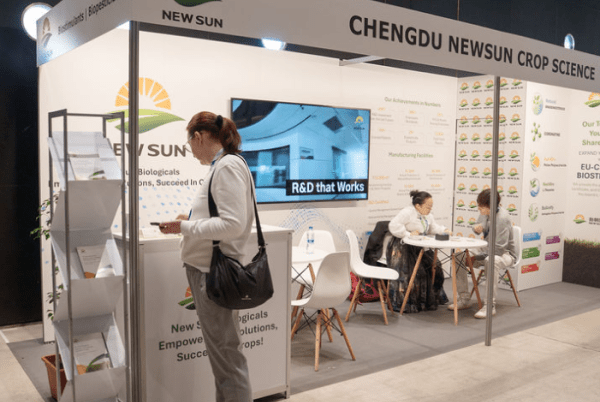
Leveraging Plant-Derived Innovation in Biostimulants
Unlike many biostimulant solutions built around generic raw materials, Newsun’s portfolio is largely developed from plant-sourced bioactive compounds. The company highlighted that China’s extensive history in medicinal plants and tea cultivation provides access to a diverse and well-characterized natural active compound pool, offering unique opportunities for agricultural innovation.
“These plant resources are not simply traditional materials,” Newsun noted during the session. “They represent a vast, underexplored library of functional molecules that, when combined with modern biotechnology, can be transformed into highly effective agricultural biostimulants.”
From Medicinal Plant Resources to Modern Agricultural Solutions
Newsun’s approach focuses on translating botanical knowledge into scalable, science-based technologies. The company said that by integrating targeted extraction, co-extraction engineering, and functional formulation, it is able to convert complex plant matrices into stable, multi-functional biostimulant systems.
This methodology allows multiple bioactive components to work synergistically, supporting crops across critical stages such as root establishment, stress adaptation, flowering, fruit setting, and quality development.
At the BSWC, Newsun highlighted its EU-certified, plant-derived biostimulant portfolio, which currently forms the foundation of its biostimulant offerings for regulated markets. This includes three technologies that the company covered in its presentation:
Pollen Polysaccharide Technology
Extracted from natural rapeseed pollen, pollen polysaccharides serve as high-efficiency plant-derived biostimulants. They combine signalling activation with nutritional support, promoting root development, enhancing nutrient use efficiency, and supporting yield stability throughout the crop growth cycle.
Astragalus Polysaccharide Technology
Derived from Astragalus species, astragalus polysaccharides serve as functional plant-based biostimulants. They regulate source–sink balance and assimilate allocation, promoting rapid enlargement of harvestable organs while supporting dry matter accumulation and maintaining crop quality, resulting in improved yield performance under stress conditions.
L-Theanine Technology
Derived from tea leaves, L-theanine is a natural plant-based amino acid biostimulant. It enhances plant stress tolerance by supporting antioxidant activity, metabolic regulation, and photosynthetic efficiency, helping crops maintain physiological stability and healthy growth under challenging conditions such as drought, salinity, and temperature fluctuations, while improving overall development and yield.
Differentiation Through Botanical Systems and Integration
By translating plant-derived bioactive compounds into standardized and compliant technologies, the company aims to deliver consistent performance under real-world farming conditions.
“Our broader platform spans multiple biological approaches,” the company stated during the congress, “but these plant-derived, EU-certified biostimulant technologies represent our current focus in supporting EU growers, combining botanical origin, functional performance, and regulatory readiness.”







 Facebook
 Twitter
 Instagram
 LinkedIn
 YouTube