

Sponsored Content
Seed coating teams are navigating a pivotal transition: moving away from fossil-derived polymers and microplastics while maintaining the application quality that daily operations require.
A central driver is Regulation (EU) 2023/2055, which will restrict microplastics in plant protection products, seeds treated with these products, and biocides beginning in October 2028. The regulation establishes transitional periods for the sale of products containing microplastics, compelling producers to adapt their seed treatment practices to meet new standards.
The objectives are explicit: lower environmental contamination across soil, water, and air, and protect public health by addressing dust generated during seed handling and application.
Plant-based binders and plasticizers—predominantly derived from starches, proteins, and cellulose—are a practical path to compliance that also supports day to day operational needs.
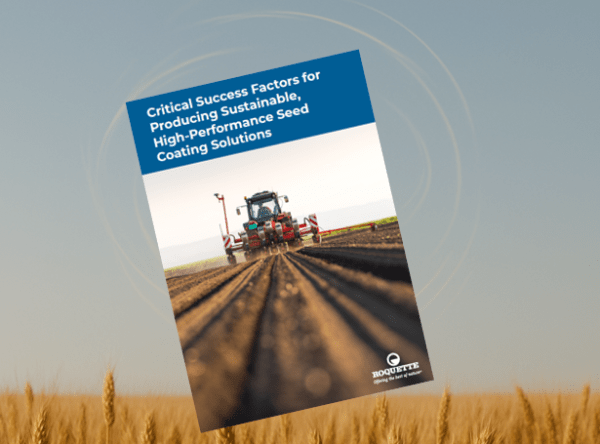
Roquette Agriscience Team’s new white paper, “Critical Success Factors for Producing Sustainable, High Performance Seed Coating Solutions,” examines how to manage this change through evidence-based formulation choices, process adjustments, and a clear understanding of upcoming regulatory requirements.
Transitioning to Sustainable Practices
Regulation (EU) 2023/2055 will introduce restrictions on microplastics in plant protection products, seeds treated with these products, and biocides beginning in October 2028. The white paper explains the implications of the regulation and its transitional periods, outlining how producers can adapt seed treatment practices to meet new standards. It highlights two core drivers behind the change: environmental stewardship—reducing microplastic emissions to limit contamination of soil, water, and air—and public health, by addressing dust generated during seed handling and application.
Balancing Cost and Innovation
The transition to microplastic-free coatings demands sustained R&D and methodical process work. The white paper captures the realities of R&D during material transition. Producers must invest in experimentation and testing to identify suitable biopolymers, optimize their combinations, and refine production processes. The goal is straightforward: ensure the resulting seed treatment is both stable and effective while aligning with evolving standards. The paper notes that costs can be considerable, spanning material sourcing and qualification as well as potential manufacturing modifications—reflecting the complexity of replacing established polymers without disrupting application quality.
The white paper provides a practical framework for decision-making: how to select and combine materials, which process levers matter most, and where to focus during scale-up. This approach helps technical teams evaluate tradeoffs between innovation, cost, and operational reliability. By organizing formulation considerations under the four success factors, the document provides a roadmap to design coatings that are compliant by design and appropriate for real-world use.
The transition to microplastic free coatings is not only a compliance topic—it is also an opportunity to modernize formulations in ways that support safer handling and consistent application quality. By articulating the drivers, performance requirements, and development work needed, the white paper gives R&D, production, and procurement stakeholders a common reference to plan and execute the shift with confidence.
Read the white paper to explore the drivers, success factors, and practical guidance behind plant-based, microplastic free seed coatings that keep performance on target.














 Facebook
 Twitter
 Instagram
 LinkedIn
 YouTube