

by Leonardo Gottems
A team of Brazilian researchers is developing a seaweed-based biostimulant capable of increasing agricultural crop tolerance to water deficit.
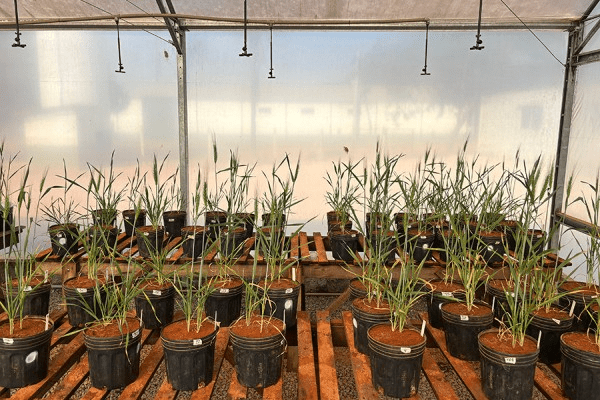
Greenhouse trials on canola and wheat have recorded increases of up to 160 percent in silique formation and 12 percent in root growth, characteristics associated with protecting productivity under drought conditions.
The Algoj project, named after the Esperanto word for algae, is a partnership between Embrapa Agroenergia and CBKK company, with funding from the Brazilian Enterprise for Industrial Research and Innovation (Embrapii).
Researchers Simone Mendonça and Patricia Abrão have led the initiative since 2023, targeting crops grown in Brazil’s Cerrado region where water stress increasingly threatens yields. The project is focusing on seaweed species that are cultivated or being established for cultivation on the Brazilian coast.
In canola, the biostimulant’s impact appears in silique formation, the pod-like structures that define productive potential. In wheat, the effect is associated with root growth, a strategy that can protect crop performance under water stress. Over two years of research, four types of marine algae were studied, with three selected for continued development.
Extracting Plant Hormones from Seaweed
The research focuses on extracting secondary metabolites, substances that enhance important behaviours in crop development and growth. “Secondary metabolites are not the main components of the plant, like those related to protein, lipid, and carbohydrate. They exist in very small quantities but act as chemical signals in other organisms,” explained Mendonça.

Reaching these metabolites, called phytohormones, proved challenging. The first obstacle was identifying extraction methods that could remove the maximum amount of these compounds from the algae. According to Mendonça, initial studies evaluated drying methods, as sun-dried algae required verification that the process did not destroy the target components. “We studied the metabolic profile of these algae and tested four to five different extraction forms for each alga. We made several attempts to see which method would best extract the metabolites,” she said.
The research overcame additional bottlenecks including transport and preservation of the bioinput. Because transporting liquid extracts is expensive and can lead to degradation, scientists developed a dry extract in wettable powder form through a spray dryer process.
“The challenge was preventing heat from destroying the algae’s sensitive phytohormones. Using specific adjuvants, we managed to protect the components of interest during extract drying and increase process yield to 80 percent, resulting in a final product with only 1.5 percent moisture, which ensures greater stability and ease of transport,” Mendonça noted.
Field Trials and Market Development
With laboratory and greenhouse cycles completed in January 2026, the project now seeks partnership renewal for field experiments to establish dosage recommendations and application periods. Many questions remain unanswered, including whether to recommend algae blends or specific applications for each species, and how the extract performs in regions with good rainfall distribution versus areas with irregular precipitation.
“Only field tests will enable us to have these answers,” Mendonça said. She believes in the algae’s potential to offer a market-ready recommendation, whether for low-rainfall regions or as an alternative during dry spells.
Due to confidentiality agreements with CBKK, the researchers cannot identify which algae were studied or selected. However, they focused on species cultivated or being established for cultivation on the Brazilian coast, whether native or introduced.
Brazilian Seaweed Production Context
Brazil’s seaweed production is concentrated on the species Kappaphycus alvarezii, with cultivation concentrated in Santa Catarina and Rio de Janeiro states. Kappaphycus alvarezii is a tropical red seaweed, often used in cooking and food products.
Marine algae production in Brazil reached 1,090 tonnes in 2024, according to the Ministry of Fisheries and Aquaculture’s latest statistics, with 2025 data expected to show growth when released in April or May 2026.
Existing demand in the ingredients sector for gums like carrageenan and alginate extracted from algae serves food, pharmaceutical, and cosmetic industries, requiring specialized extraction and purification facilities. These ingredients are currently imported.
In agriculture, commercial products already contain Kappaphycus, through companies like AlgasBrasil and Carbom, and Ascophyllum nodosum through imported products. The Algoj project’s focus is biostimulant use, distinct from biofertilizers, which in Brazil tend to refer to inoculants.
Bruno Carloto, agronomist and strategic marketing manager for Acadian Plant Health in Brazil and Paraguay, provided market context. “The Brazilian biostimulant market presents very significant growth potential, driven by both agricultural expansion and the growing need for solutions that increase productive efficiency and crop resilience. Over the past five years, the sector has recorded average annual growth near 10 percent, with prospects indicating this pace should continue at least until 2030,” he said.
Soybeans represent the primary crop associated with biostimulant use in Brazil, with adoption rates around 40 percent despite the enormous cultivated area, indicating substantial expansion room. Sugarcane shows higher adoption levels, while corn, cotton, coffee, and citrus remain underutilized segments with significant potential.
“Within this context, biostimulants based on Ascophyllum nodosum extracts have gained prominence. These products are recognized for their capacity to stimulate physiological processes in plants, contributing to greater tolerance to abiotic stresses like drought and high temperatures—factors that tend to become increasingly relevant given climate change,” Carloto noted.
The expectation is that the seaweed extract market will experience even more significant growth in coming years, accompanying producers’ search for tools that increase productive stability and agricultural system sustainability.








 Facebook
 Twitter
 Instagram
 LinkedIn
 YouTube