



New biological technology uses naturally occurring plant signals to support yield and crop quality, with first products planned for 2027
By Janet Kanters
Syngenta has announced EXORT technology, a new biological platform based on naturally occurring plant microRNAs that the company says can help crops make more efficient use of their own biological processes.
The technology is designed for foliar application at very low doses. Rather than introducing a conventional active ingredient that targets a pest or disease, EXORT uses selected microRNAs – small molecules that help regulate how plants use biological instructions – to influence processes involved in crop development and responses to changing conditions.
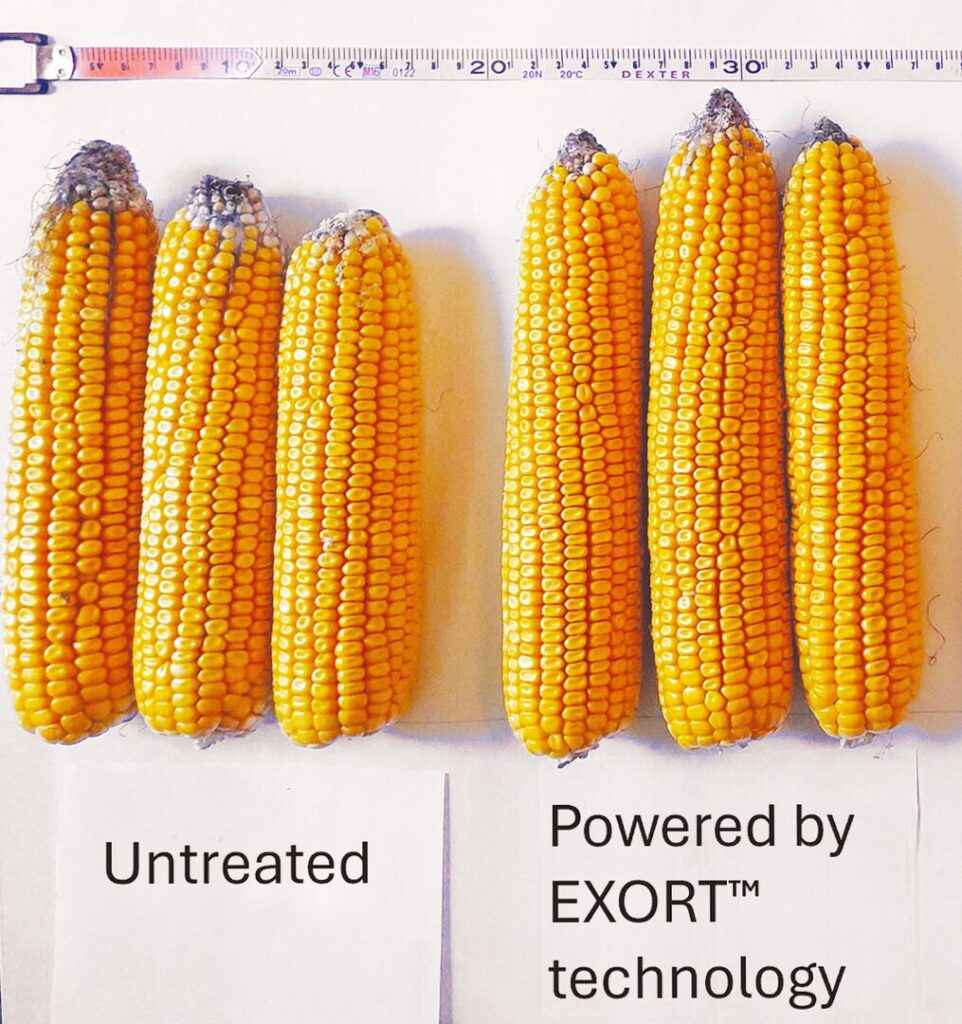
Syngenta says the technology has been evaluated in a large multi-year field program involving rice, soybean, corn, cotton, vegetables and fruit across multiple geographies. The company reports consistent yield gains across the crops tested, although detailed trial results were not included in the announcement.
“What makes EXORT technology so exciting is that it translates a fundamental biological mechanism into a practical agricultural solution,” said Camilla Corsi, Syngenta’s Head of Crop Protection Research & Development.
She said advances in genomics, bioinformatics and plant science have enabled researchers to identify and apply naturally occurring microRNAs with greater precision.
“This is a remarkable example of how breakthrough science can be harnessed to help crops perform at their best, while supporting more sustainable agriculture,” Corsi said.
MicroRNAs occur naturally in plants and are involved in regulating gene activity and biological processes. Syngenta’s EXORT approach is intended to select specific microRNAs and deliver them to crops at field scale, with the aim of helping plants allocate and use their resources more effectively.
The company has been researching plant microRNAs for years. Syngenta says the work builds on advances in the broader field of microRNA research, which received recognition through the 2024 Nobel Prize in Physiology or Medicine.
The company plans to launch the first EXORT-based products from 2027, followed by a phased introduction across about 20 countries and multiple crops.
Syngenta describes EXORT as a potential platform for a new class of biological products. The technology is intended to fit into existing farm practices rather than require changes to normal field operations.
The company has not yet provided details on the specific crops, markets, product formulations or regulatory status of the first EXORT products.















 Facebook
 Twitter
 Instagram
 LinkedIn
 YouTube