


By Janet Kanters
Growers in the Netherlands and Belgium are set to gain a powerful new ally in their fight against invasive thrips species.
Koppert, a leader in biological crop protection, is introducing Franklinothrips vespiformis, a predatory thrip designed to tackle leaf-dwelling pests that have proven resistant to traditional methods.
The product will be available under a white label starting this month, allowing growers to test its effectiveness while refining strategies for broader use.
Thrips infestations have become a growing challenge, particularly species like Echinothrips americanus, Thrips setosus, and Chaetanaphothrips orchidii, which thrive on leaf surfaces. Unlike other biological solutions that target thrips larvae in flowers, Franklinothrips vespiformis actively hunts pests on leaves.
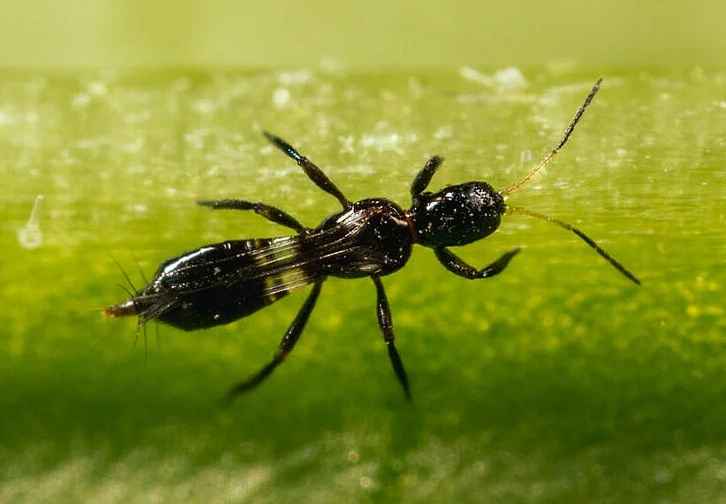
Koppert has said that trials have shown that F. vespiformis performs “exceptionally well” under high pest pressure, especially when paired with supplementary feeding. Its black, ant-like appearance and red larvae make it easy for growers to monitor its activity and effectiveness in crops. This visibility, combined with its ability to complement existing solutions like predatory mites and Orius, makes it a valuable addition to integrated pest management strategies, notes the company.
The predator thrip is suitable for both ornamental and vegetable crops, including potted plants, gerberas, bell peppers, and cucumbers. Early introduction and preventive measures, such as supplementary feeding, are key to building a stable population, says Koppert. For curative use, higher dosages and patience are required, as results may take weeks to become visible.
Koppert emphasizes the importance of favourable conditions, such as temperatures above 18°C and limited use of chemical agents, to ensure optimal performance. By working closely with growers, Koppert aims to refine application techniques and gather insights for an international rollout of Franklinothrips vespiformis.















 Facebook
 Twitter
 Instagram
 LinkedIn
 YouTube