

By Janet Kanters
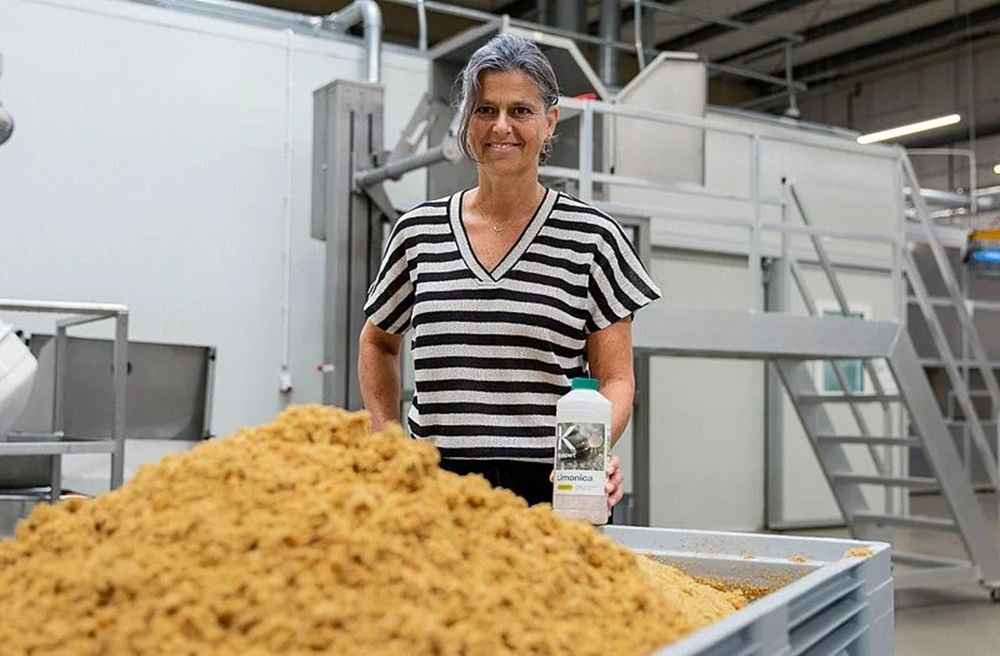
Koppert has achieved a major production milestone in biological crop protection with the successful large-scale rearing of Amblydromalus limonicus, marketed as Limonica.
Long regarded as one of the most difficult predatory mites to produce consistently, the species is now available in commercial volumes following years of research, process redesign and cross-functional collaboration.
The breakthrough positions Koppert as the only company worldwide able to supply Limonica at scale, strengthening growers’ options for managing thrips and other pests as chemical controls become less effective or unavailable.
“Technically speaking, it is one of the best predatory mites we know,” says Marjon Diender, Lead Rearing Techniques at Koppert. “It combines strong predation capacity with rapid reproduction and a broad target range. But it also places extremely high demands on its living environment. It does not tolerate disturbances, needs space, and only accepts the best food. It is extremely demanding in terms of its rearing conditions and that makes its production complex.”
Koppert first introduced Limonica commercially in 2012, but scaling up production proved challenging. The mite’s sensitivity to environmental conditions and food quality led to instability during rearing, including cannibalistic behaviour if conditions were not optimal.
The turning point came two years ago, when Koppert launched a dedicated R&D project to reassess the entire production process.
“Together with production, we reviewed everything – from the type and quantity of feed to the composition of the rearing medium and the design of new production lines,” Diender explains. “After implementing these improvements, the results were quickly visible.”
Recent technical breakthroughs now allow Limonica to be reared at significantly higher densities with improved consistency and reduced variability. According to Koppert, this has transformed an unstable production process into a robust, scalable system capable of supporting broader market demand.
Limonica feeds on a wide range of pests, including first- and second-instar thrips larvae, whitefly eggs and young nymphs, and, to some extent, spider mites. Its ability to attack multiple pest stages makes it particularly valuable for early intervention in integrated pest management (IPM) programs.
Thrips remain one of the most persistent challenges in protected horticulture, with both established species such as Frankliniella occidentalis and Thrips tabaci, and emerging invasive species like Thrips parvispinus and Scirtothrips dorsalis, causing crop damage and spreading viruses.
“With chemical control options becoming less viable, effective biological solutions are increasingly important,” Diender says. “Trials conducted by Koppert Spain indicate that Limonica can deliver stronger control of T. parvispinus compared to several other predatory mite species. Under optimal conditions, it also reproduces faster than many widely used mites, allowing populations to build up quickly in the crop.”
Koppert attributes the success of the project to its long-standing expertise in rearing natural enemies and close collaboration between R&D, production teams and rearing specialists.
“Those years of experience form the basis of everything we do,” says Diender. “Thanks to this accumulated knowledge, combined with close collaboration across teams, we are now able to successfully produce and deliver Limonica on a large scale.”
The company has also protected key elements of the production process through three patents. Siew-Loon Ooi, responsible for the patent process at Koppert, says this was essential to sustaining innovation. “Patents help protect innovation and support continued investment in improvement and upscaling.”
With commercial volumes now available worldwide, Koppert expects further optimisations to enhance grower outcomes. One recent development is the launch of Limonica Ulti-Mite, which combines Amblydromalus limonicus with slow-release Ulti-Mite sachet technology for continuous, controlled release in the crop. This allows the beneficials to work better in challenging environmental conditions (e.g., low humidity).
“We have cracked the code,” Diender says. “The rearing is good, the volumes are adjustable, and we are ready to support growers worldwide with this powerful and versatile, natural solution. Limonica has everything it takes to become an established player in integrated crop protection.”














 Facebook
 Twitter
 Instagram
 LinkedIn
 YouTube