


By Leonardo Gottems
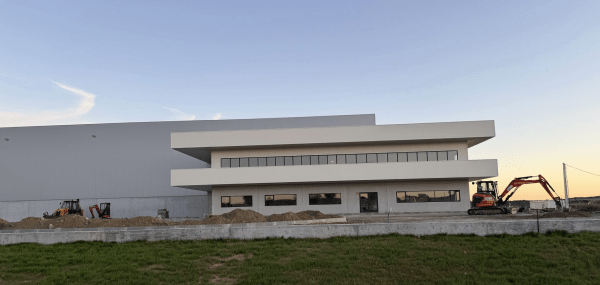
Fertiprado will soon complete the construction of a new production unit in Elvas, eastern Portugal. The facility is designed to industrialize next-generation inoculated seed technologies, integrating biostimulants, phytoprotectants, nitrogen-fixing microorganisms, phosphorus solubilizers, and root growth promoters.
Located approximately 200 km east of Lisbon, the new plant represents a significant upgrade in both capacity and technological sophistication, and showcases Fertiprado’s transition from a seed company to a provider of integrated biological solutions.
Backed by European funding programs including Portugal 2030 and Compete 2030, the project carries a total investment of €5.4 million, with €922,970 in European Union financial support, plus 40% in EU co-financing.
Industrializing Seed Inoculation 2.0
At the core of the investment is a fully integrated production system comprising inoculation, mixing, and bagging/palletization lines. The facility introduces advanced inoculation and pelleting technologies, enabling the direct application of complex biological formulations to seeds at scale.
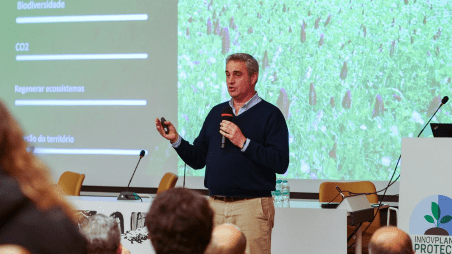
According to José Freire, Commercial and Marketing Director at Fertiprado, the company is deploying what he describes as “inoculation 2.0”—a technological leap that enhances the biological performance of seeds. “Field studies indicate biomass increases exceeding 20% in some cases,” he noted, highlighting the tangible agronomic gains expected for farmers.
These innovations are particularly relevant in Mediterranean agroecosystems, where soil degradation, water scarcity, and climate variability demand resilient cropping solutions. By embedding beneficial microorganisms and bioactive compounds into seeds, Fertiprado aims to improve nutrient uptake efficiency, stress tolerance, and overall crop establishment.
From Biodiverse Seeds to Microbiological Platforms
Founded in 1990 by agronomist David Crespo, Fertiprado has built its reputation on biodiversity-driven seed mixtures tailored to Mediterranean conditions. Early on, the company challenged conventional input-intensive models by promoting legume-rich seed blends capable of biological nitrogen fixation through symbiosis with rhizobia bacteria.
Today, this foundation is evolving into a broader microbiological platform. The company is actively developing “cocktails” of bacteria and fungi designed to enhance plant resilience against abiotic stress and pest pressures. This shift aligns with global trends toward biologicals and regenerative agriculture, where soil health and microbial activity are central to productivity.
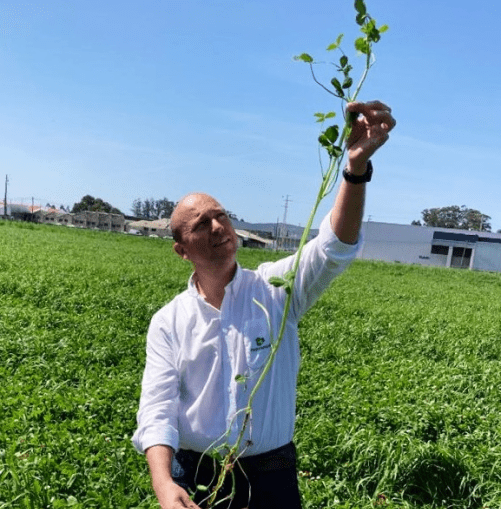
Joel Presa, Director of Strategy and Product Development, emphasizes that innovation is increasingly collaborative. “We are highly selective in identifying research partners to co-develop solutions. Our ambition is to build a comprehensive, year-round portfolio that addresses multiple crops and production systems,” he said.
Scaling Capacity to Match Market Demand
The new Elvas facility is also a response to accelerating market demand for value-added seeds. The new infrastructure will have approximately 5,600 square meters of storage area. By expanding production capacity and incorporating advanced processing technologies, Fertiprado aims to ensure consistent product availability while shortening time-to-market for new innovations. The plant’s modular design allows for future scalability and the integration of additional processes, reinforcing its role as a hub for technological development.
Headquartered in Vaiamonte, in Portugal’s Alentejo region, Fertiprado has steadily expanded its footprint beyond domestic markets into Spain, Italy, and Uruguay. The choice of Elvas is related to logistical factors and proximity to transport infrastructure. The unit will be located next to the highway and close to the Sines-Madrid freight rail line, as well as being near the Badajoz Logistics Platform.
Its specialization in Mediterranean agronomy—characterized by seasonal rainfall patterns and increasing desertification risks—positions the company in a niche with growing global relevance. Regions with Mediterranean climates are becoming testing grounds for adaptive technologies. Fertiprado’s focus on soil-centric solutions and biological inputs aligns with this paradigm shift, offering scalable approaches to enhance both productivity and sustainability.
With the Elvas unit nearing operational readiness, Fertiprado is poised to enter a new phase of industrial and technological maturity. This facility consolidates its transition from a seed company to a provider of integrated biological solutions.

As the first commercial batches of inoculated seeds from the new plant reach the market, the company will be closely watched as a case study in how traditional seed businesses can evolve within the rapidly expanding biologicals segment.
More from New AG International
Liquiadubos to inaugurate liquid fertilizer plant in Portugal












 Facebook
 Twitter
 Instagram
 LinkedIn
 YouTube