


By Janet Kanters
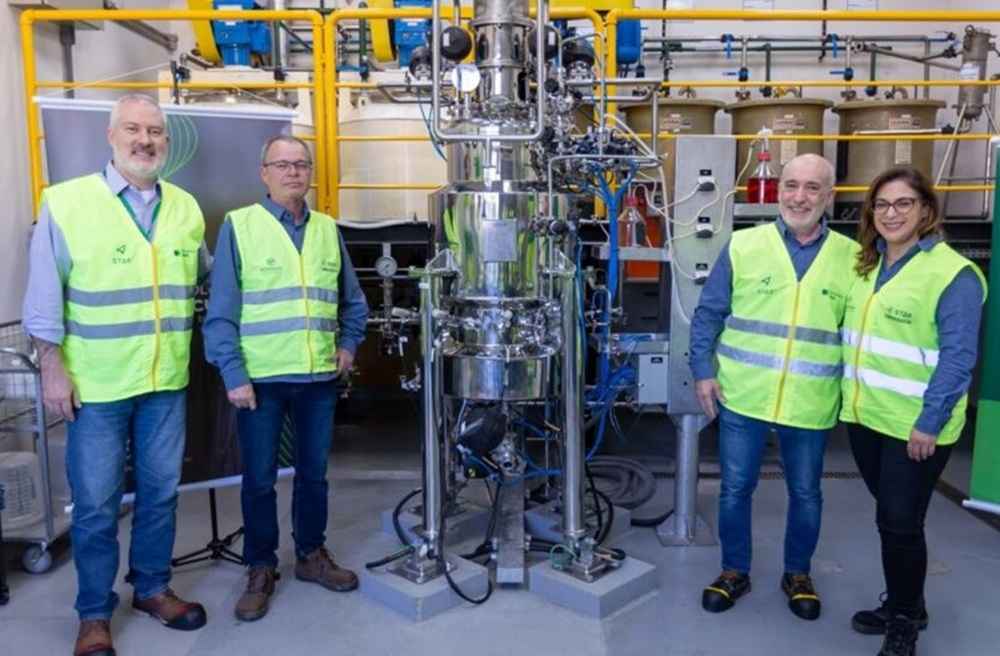
Rovensa Next has unveiled a “state-of-the-art” pilot fermentation plant in Brazil.
The company says the facility, located at the Monte Mor industrial fermentation site, bridges the gap between laboratory research and full-scale industrial production, “enabling faster and more reliable development of microbial biosolutions.”
The new plant, operational since July 2025, is designed to scale up microbial processes with industrial precision. It features a 100-liter working volume and advanced monitoring systems that replicate the conditions of large-scale production. This allows researchers to fine-tune formulations and production strategies with greater accuracy, reducing risks and accelerating the launch of innovative bio-inputs for farmers worldwide.
“This facility is a real turning point in how we move from research to industrial production,” said Johana Perez, Global R&D Manager at Rovensa Next. “We can now validate new bio-inputs more quickly and with greater confidence.”
The pilot plant works in tandem with Rovensa Next’s Global Research and Innovation Center for Biosolutions in Hortolândia, forming a comprehensive innovation ecosystem in Brazil. The company says that together, these facilities support the “development of next-generation microbial solutions, such as biofertilizers, biostimulants, and biocontrol products, which help farmers improve crop resilience, nutrient efficiency, and soil health.”
Preparing for the next generation of biosolutions
The fermentation plant supports the development and scale-up of both new microorganism-based biosolutions and those already part of Rovensa Next’s portfolio. These include Phos’Up, which improves phosphorus availability in the soil, and Azzofix, a microbial seed treatment that enhances nitrogen-use efficiency in crops. The portfolio also includes Wiibio, a Bacillus-based biofertilizer focused on soil regeneration, and Biimore, a biostimulant designed to deliver high performance at ultra-low doses during key crop development stages.
“Internally, this gives us more efficiency, quality and agility across our processes,” said Odacir Lameu, R&D Coordinator and head of the pilot plant. “For growers, it means faster and more reliable responses to their needs for innovative bio-inputs,” he added.
The company says the pilot plant is designed to evolve, with future equipment such as centrifuges, filters, and spray dryers to achieve efficient scale-up and faster deployment.














 Facebook
 Twitter
 Instagram
 LinkedIn
 YouTube