

by Luke Hutson, Chief Analyst
In May, the European Commission announced its Fertiliser Action Plan. Then only a month later, two high profile exits from the European fertilizer industry were announced. Ameropa has off-loaded Azomures, the Romanian fertilizer producer, and OCI Global – derived from the Egyptian concrete behemoth Orascom Industries – has sold 50% in its OCI Nitrogen business based in Geleen, Netherlands.
When launching its Fertiliser Action Plan, the European Commission outlined its desire to support the EU’s farmers “who are facing rising fertilizer costs and scarcity.” This includes reinforcing domestic production and reducing Europe’s dependency on imports. There was the ambition of investing in a “stronger European fertilizer industry” and building a future based on sustainability, affordability and industrial strength. The more immediate reason for the plan was the escalation in fertilizer prices due to the conflict in the Middle East and closure of the Strait of Hormuz.
Anyone who has followed the European fertilizer industry would maybe ask where has this plan been for the last two decades, while domestic production has struggled and imports have risen. An industry body who has been watching closely is Fertilizers Europe, once known as EFMA – the European Manufacturer’s Association.
They were not too impressed with the plan – specifically reducing the tariffs on imports for 12 months. Using direct language, the Brussels-based group, said, “Fertilizers Europe regrets the Council’s decision to suspend customs tariffs for one year on key nitrogen-based fertilisers, including urea and ammonia. At a time when the European Union is calling for greater strategic autonomy, resilient supply chains and stronger domestic industrial capacity, this decision sends the wrong signal. It risks weakening the very European fertilizer production base that the EU has recently recognised as essential for food security, farmers’ resilience and Europe’s long-term competitiveness.”
CBAM whammy
In addition to the plan announced in May, the European Union also has the Carbon Adjustment Mechanism (CBAM) coming into effect in 2026. CBAM is an additional carbon tax applied to imports coming into the EU, initially in the cement, iron and steel, aluminium, fertilizer and electricity sectors.
The general idea is that the more emissions involved in the production of the good or product, then the higher the CBAM tax at the border. Certificates need to be purchased to cover the calculated CBAM rate.
When it comes to fertilizers, the additional cost to importing a tonne of urea could be around 40 euros per tonne – but it could go higher.
Mariano Alessio Vernì, Vice President, SILC Fertilizzanti Srl, explained during a presentation at the New AG International Annual event held in Madrid, 28-29 April, how in 2026 CBAM certificates will be calculated using quarterly averages from EU’s Emissions Trading Scheme auction clearing prices, so-called default values, and from 2027 the Commission would calculate a weekly price.
Third countries who participate in the EU-ETS or have an emission trading system linked to it are excluded from the CBAM, such as Switzerland, Norway, Iceland and Liechtenstein, according to Vernì.
The likely effect of CBAM? Additional import costs will be passed on to the customer – in other words the farmer.
Following concern for fertilizer prices, the European Commission published a revision of CBAM in December 2025 for the sector, announcing a flat 1% markup to default values.
Fertilizers Europe was not impressed, again. Antoine Hoxha, Director General stressed: “The Commission’s decision to start with the markup for default values at 1% reflects a genuine effort to address farmers’ concerns about the CBAM launch, and we acknowledge that. At the same time, extending a 1% markup on default values indefinitely will discourage the reporting of real emissions by overseas producers – particularly those with a higher footprint than their country’s average. Such watering down of the rules undermines CBAM’s core objectives of fair competition and transparency.”
Reduce Russian imports
One of the contrasting impacts of the Russia/Ukraine conflict has been a reduction in natural gas imports into the EU from Russia, yet with an increase in Russia fertilizer imports.
Forming another pillar to the EU’s fertilizer plan are the phased increases in duties on Russian and Belarus fertilizers. Tariffs are set to increase from 40 euros to 430 euros per tonnes by 2028 (more here). So, effectively squeezing fertilizer product from those countries out of the market.
Taking urea as an example, this will mean more demand for other regions such as Algeria and Egypt. These two countries already enjoy a 0% tariff on their imports, and for many years have already been a key source of supply for European markets, not just in the EU.
The likely effect? More demand for urea from Algeria and Egypt, increasing prices that will eventually be passed on to the customer – in other words the farmer. And ultimately the consumer.
Two major exits
Two developments in June illustrate the lack of confidence in the European sector.
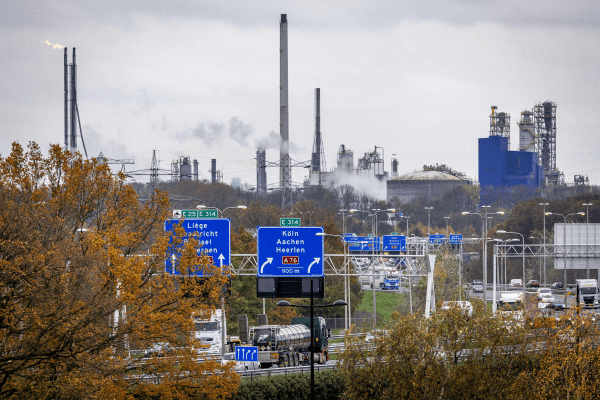
OCI Global has begun the check-out process at its nitrogen production site at Geleen, Netherlands, selling the business to Czech agribusiness conglomerate Agrofert for 110 million euros.
Agrofert is a familiar partner for OCI Global, having acquired its ammonia infrastructure in Rotterdam at the end of last year.
OCI Group has hedged the exit, retaining a 50% economic interest while giving Agrofert “operational control”. The agreement between OCI Group and Agrofert includes what is called a “put/call option” for the remaining 50% stake. This option is exercisable by either company from two years after close of the initial transaction, says an OCI Global statement, through a pre-agreed 7x multiple applied to the average pro-forma adjusted EBITDA of the preceding two years.
No doubt Agrofert has a plan, but will it produce ammonia at Geleen? As recently as December 2024, only one of the two OCI ammonia plants at Geleen were operating. Agrofert has a number of fertilizer producers within the group, mainly in Central Europe – namely Lovochemie in Czechia and Duslo in Slovakia.
Axing Azomures
Swiss-based grain and fertilizer trader Ameropa has offloaded Azomures, selling the Romanian fertilizer producer to Romgaz – the Romanian gas operator. Romgaz reportedly paid 69 million euros for the company, according to price reporting agency Argus.
Ameropa acquired this production asset partly for its urea ammonium nitrate capacity – among other fertilizers – around 15 years ago.
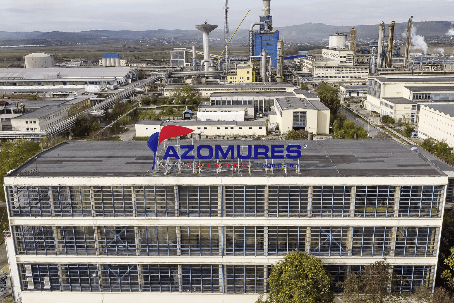
There have been bumps along the way. The plant already had a chequered history and had been long term-idled before Ameropa resurrected the site in 2016. More recently, production was suspended in 2024 and restarted in 2025.
The final straw appears to have been the Russia/Ukraine war. “Over the last four years since the onset of the Russia/Ukraine war, the fertilizer industry in Europe has faced significant pressure from volatile energy markets, changing market conditions, and uncertainty around long-term natural gas supply. These challenges affected fertilizer producers across Europe and created a difficult operating environment for Azomures,” the statement from Ameropa reads.
The Group CEO Josh Zacharias added: “While the story from when we purchased Azomures is not how we expected it, we are happy to have found a new and sustainable home for more than 2,000 employees and contractors that work on the Azomures platform as well as to have ensured that Azomures has a chance for long-term production to serve the Romanian agricultural market.”
Part of that story is the 100-million-euros price tag back in 2012, according to press reports at the time. Not much of a return from the reported 69 million euros selling price.
Ameropa still retains other operations in Romania, mainly in grain and fertilizer distribution, and a large terminal Chimpex at the Constanta port. Zacharias referred to 1,000 retained employees at 30 other locations in the country.
Closed for business
Fertilizer closures have been a common feature across Europe, not just EU member states. In the UK, CF Industries shut down the country’s last ammonia producing plant in 2023, citing high gas prices. As a result, the production of ammonium nitrate in the UK is dependent on imported ammonia. Other knock-on effects were a tightening in the supply of CO2 – a byproduct of ammonia production.
In Belgium, Yara closed its 400,000 tonnes per year (t/y) ammonia unit at Tertre in October 2024, also blaming energy prices. Similar to CF Industries, the decision was taken to bring ammonia to the site to continue production, which is fine if ammonia is available and at an economic price.
In Germany, BASF closed one of its two ammonia units in Ludwigshafen in 2023, along with its ammonium sulphate nitrate unit. The BASF Factbook 2025 still has the company operating one ammonia plant and a capacity to produce more than 500,000 tonnes of urea, although a good part of that will be for diesel exhaust fluid (DEF).
The EU’s fertilizer deal mentioned sustainability. But the drive for sustainability comes with a caution. A recent example is Cinis Fertilizer, the Swedish producer of sustainable potassium sulphate, which has now been acquired by Tessenderlo Kerley, here.
Onshoring on trend
Meanwhile, elsewhere in the world, Australia is gunning for onshore production through the Perdaman large-scale urea project in Karratha, Western Australia. Scheduled to come on-stream in the next 18 months or so, the project has a nameplate capacity of 2.3 million t/yof urea, which would cover around 80% of Australia’s total consumption. Its arable farmers might struggle for margin this year because of the disruption from the Strait of Hormuz and maybe beyond until Perdaman comes on-stream.
Another major nitrogen importer, Brazil has also invested in onshore capacity. Petrobras has brought the Fabrica de Fertilizantes Nitrogenados (Fafen) plant back on-stream, located in northeastern Sergipe state. The plant had been idled since 2024 under a previous owner, but national oil company Petrobras restarted ammonia production in December 2025 and started urea production in January 2026.
Plan without a strategy
Much has been written about the impact of the closure of the Strait of Hormuz on the fertilizer trade, particularly urea exports from Saudi Arabia, UAE, Qatar and Iran, as well as sulphur exports from the region. Global fertilizer markets were already in flux because of the Russia/Ukraine conflict. Whatever ‘plans’ are made, one of the consequences of the current geopolitical bind is that fertilizers will become an increasingly strategic resource. The word volatile could also be used to describe the markets, but that is too price related.
Maybe the long arc of geopolitics could bring the spotlight back to nutrient use efficiency (NUE), getting the most out of every tonne of applied fertilizer. Just one example could involve the greater use of foliar applications of nitrogen using inputs such as biostimulants to aid NUE. Tweaking tariffs can form part of a plan, but it’s unlikely to make a strategy.
+++










 Facebook
 Twitter
 Instagram
 LinkedIn
 YouTube